
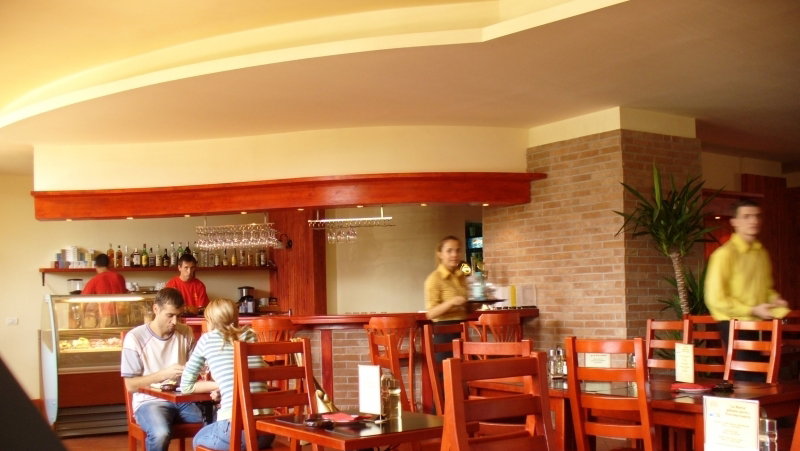
The network currently comprises eight restaurants, two of which on the seaside and the rest in Bucharest, after having closed two in mid-2016. The decision to close was made after the ten-year leases expired and the partiers failed to reach an agreement.
“We closed the restaurant in the shopping gallery of Carrefour Feeria in Baneasa after ten years in mid last year. About the same time we also closed the restaurant in Piata Alba Iulia, after the lease expired and we failed to reach a new agreement with the owner,” says Catalin Mahu, owner of the La Mama chain, one of the oldest and most powerful on the market.
“None of the closures so far has been caused by financial reasons, because the restaurants were profitable.”
The entrepreneur says he plans to continue expansion of the network in Bucharest and open at least one restaurant this year. He did not say exactly where he plans to expand the La Mama network, merely that investment in an about 250 to 300 square meter restaurant ranges from EUR100,000 to EUR200,000.
“We will be renting the place, like we did in most cases.”
Mahu says he has considered buying a rival, because expansion would be faster that way but has not found a target yet. A number of entrepreneurial businesses are said to be for sale.
“Given the current development of the local actors in this business, there is no one big enough to draw the attention of a private equity firm. To be able to buy each other out the bigger actors of the market should have enough funds available, which I don’t think is the case now.”
A potential deal between two local actors would only be possible if a bank funded it, Mahu said.
“If we had such a deal, I’d see it as a good sign the market is moving.”
The entrepreneur is rather skeptical and says many bars and restaurants continue to close because of the lack of demand that would keep them all in business.
“The years 2006-2007 have not come back. I don’t see the economic growth announced in my restaurants. We had a 5% to 10% like-for-like growth but that was because of us not because of the fiscal relaxation steps or wage raises.”
Mahu says the VAT cut left Romanian consumers with more disposable income, but they chose to spend it in supermarkets and other types of stores rather than restaurants.
(English version by Loredana Fratila-Cristescu)