
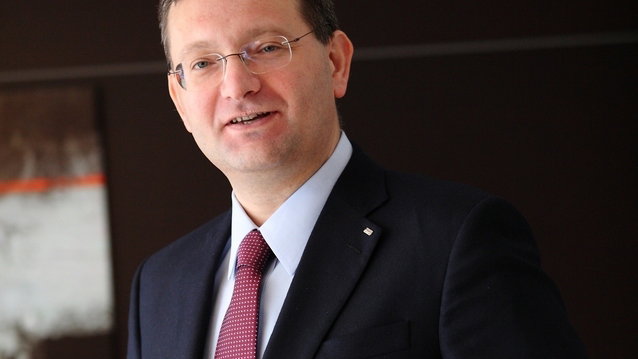
Many businesses are still driven by inertia because managers don’t think about or don’t know how to adjust their business models, and this is a vulnerability, Toader also said.
“Companies’ management and entrepreneurs should be much more concerned with their business model – Is it a good and relevant model for the current conditions or not? This is a commonsensical question, but I have often noticed that many businesses are still driven by inertia. This is an element I see as a vulnerability for companies and entrepreneurs,” the head of KPMG told ZF.
He says a set of business models today depend on how technology is used. “A recalibration of the business model, using technology, can ensure access to a large number of clients with minimal costs.”
According to the head of KPMG, one of the lessons that the economic crisis has taught people and companies in Romania is that money is no longer made easily and that there are no bargains.
“And this caused us great sadness because we are a Latin people, we are quite temperamental. We are already in a reality where we have to get used to the idea of working more for the same money.”
This is the first time that an important leader of the Romanian business sector talks about the lack of transparency in the public sector, while also making suggestions.
Toader cites the insolvency of the first town hall in Romania- of the Aninoasa town in Hunedoara county, western Romania.
The Aninoasa town hall filed for insolvency with the Hunedoara Court at the beginning of June. The administration’s debts exceeded the value of the local budget. This is the first insolvency of a town hall since the fall of communism in Romania in 1989.
“In this particular case we are talking about a small town. The important thing is to see what we can learn from this, understand the causes so that it will not take another 3-4 insolvencies for a response to emerge. Improved transparency among local authorities could help prevent such situations in the future, Toader told ZF.
Ziarul Financiar has proposed that public sector wages be published and the release of reports on acquisitions and achievements in order to increase transparency in the public administration. ZF has also asked for names and positions of employees in the public sector to be published.
“The financial information of public institutions has a crucial role: to see their accounting system, the accounting principles they use, how right they are, what the internal checks are, how professional those who conduct them are. It would be useful for this information to be made public because once it becomes public, this makes those who control the information more responsible towards the interested parties, i.e. people living in the respective area.”
International reporting standards (IPSAS) for town halls from 2016 onwards
In the private business sector there are the international financial reporting standards – IFRS – which make transactions more transparent. The Romanian banking system was the first to join IFRS on January 1 2012. Later stock exchange listed companies joined these standards.
In many ways a town hall works similarly to a private entity: it sells, buys, contracts, collects, pays and [is expected to] pursue making a profit from its transactions, and has the obligation to provide services to the people, Toader explains.
But the public sector has its own standards, IPSAS.
“IPSAS is the best international practice of financial reporting for public sector entities. The standards apply to general financial statements put together based on commitment accounting. (…) In Romania their implementation is planned for the end of 2016 and this is a welcome thing.”
(English version by Daniela Stoican)