
As the international regulatory environment has toughened in the wake of the subprime crisis, audit reforms are being discussed at the European level, in order to restore confidence in financial reporting.
The reforms of the European Commission include proposals for mandatory audit firm rotation and potentially requiring large networks to become “audit only.”. The “big four” firms are KPMG, Ernst & Young, PricewaterhouseCoopers and Deloitte.
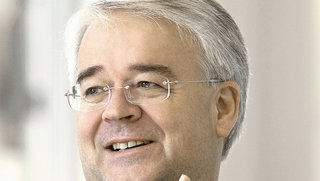
Michael Andrew says KPMG strongly supports a positive agenda for change to enhance audit and audit quality, but he is concerned that the proposals of the European Commission could significantly disrupt the audit market and raise audit quality risks.
“We don’t think these proposals will serve to improve audit quality – in fact, we believe they would have just the opposite effect, while also increasing costs to business. Being a multi-disciplinary firm is essential to performing quality audits, especially for large, complex clients,” Michael Andrew told ZF in an exclusive interview.
The chairman of KPMG at international level was in Bucharest for a few days at the regional meeting of KPMG partners in Central and Eastern Europe. This is the first time that a chairman of KPMG International visits Romania.
The proposals of the European Commission are currently being discussed as part of the political and legislative process and this will take some time, Andrew also said.
“Many recommendations have been made to improve the proposals, and we are optimistic about this progress. Ultimately it is important not to lose sight of the goals of enhancing audit quality and corporate governance to benefit all participants in the capital markets,” he says.
Andrew says KPMG supports enhancing communication between auditors and prudential regulators, and improving the quality of information flowing to the marketplace – which could include expanding the scope of the audit beyond a company’s financial statements.
The audit market today is extremely competitive. Audits require a high level of skills and industry expertise that not all firms possess, Andrew says.
In terms of audit, he believes one needs to look at the financial and audit reporting model and determine how it can be made more relevant to the needs of investors, governments and the public.
KPMG’s priorities
KPMG’s largest sector continues to be financial services and Andrew expects continued demand as banks adjust to new regulatory and compliance demands, and develop new growth strategies and ways to become more efficient.
Other sectors that KPMG is focusing on are areas such as financial services, healthcare, government and infrastructure, Andrew also says.
Given that all these sectors are subject to massive changes and seeking new sources of growth, Andrew expects demand for KPMG services to continue to increase in the coming years.
“Healthcare is a great example. We launched our healthcare practice two years ago and it has become our fastest growing sector globally.” He adds that management consulting and the company’s tax practice have recorded strong growth.
He points to KPMG’s Romanian practice as an example of achieving success in difficult times. “KPMG in Romania strengthened its Audit, Advisory, and Tax departments and diversified its services to respond to a changing landscape of issues facing its clients”.
Adaptable companies will continue to be successful
The companies that will continue to be successful are the ones that are adaptable, that anticipate and manage change efficiently, staying close to their clients’ needs and understanding the rebalancing of the global economy.
“One of the lessons learned in the aftermath of the financial crisis is that companies that have done the best are the ones that used the downturn as a time to reshape their business – making sure they have the right products and services to offer the most value to their customers and to make their businesses more efficient.”
Companies need to understand the trends of the rebalancing of the global economy.
“Developing economies in Asia, and also Latin America, Africa, Middle East and Eastern Europe, are expanding the global middle class and increasing their share of global wealth.”
With the prospect of years of slow growth in Western Europe and a mature US economy, CEOs know they have to invest in developing economies, so they need to better understand how to do business in these markets.
Technology is another critical area of focus for business. For example mobility is creating a huge marketplace shift, in the ways business connects with customers, and among its employees and suppliers. There are now more than 6 billion mobile subscribers globally, and half of those are in Asia. Forward thinking businesses are also starting to use data to transform their operating models, Michael Andrew also says.
“Data analytics is being used to help business get insights from all that data – to understand their customers, how to improve margins, and get sales and delivery costs down. The amount of data in the world is doubling every two years – it is referred to as ‘big data.'”
What the chairman of KPMG International thinks about Romania and the eurozone
The head of KPMG says the good news for Romania is that the Romanian banking sector has been relatively stable, but the main risk would be contagion from the eurozone crisis.
“The main domestic issue has been political instability this year which, if it continues, could have a negative effect on the economy. However, I hope that the situation will improve after the parliamentary elections in late 2012.”
Based on weakening data in the third quarter, he says Europe is likely in recession, and that there is little indication that growth will return by the end of the year.
Andrew views the Eurozone situation as occurring in three stages.
First has been stabilizing the banking system, and there has been some encouraging progress resulting in banks being recapitalized, contracting their balance sheets, and there is better regulatory oversight, said Andrew.
The second stage is governance reform in the region with pan-European structures to maintain the integrity of the Euro and a stronger ECB that can intervene to stabilize bond rates.
“There is general consensus that this is the right course of action, but it is a complex undertaking with 17 countries all trying to come to agreement, in the face of political populism and legal challenges”.
The third stage which is most important for the long-term is the competitiveness of Europe’s economy, also said Andrew.
“This involves a host of complex issues – how to reform labor markets and address record unemployment – especially among youth, the social security net and willingness to make lifestyle changes to become more competitive in the global marketplace”.