
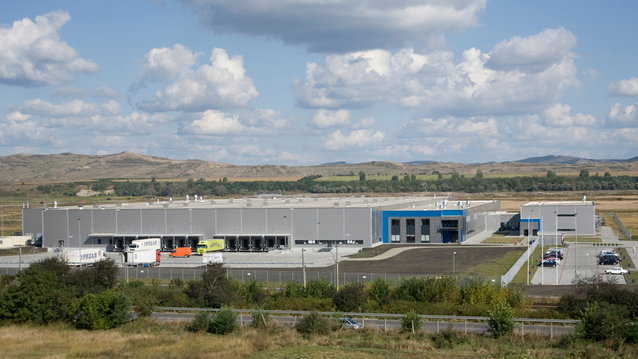
“We are currently negotiating with five economic operators, but negotiations are advanced with two of them. We cannot yet reveal the results of negotiations for confidentiality reasons,” Alin Tise, president of the Cluj County Council, told ZF Transilvania.
According to market sources, the investor that could take over the Nokia facilities in Jucu is Italian home appliances manufacturer De Longhi.
De Longhi owns facilities in China (Guangdong and Shanghai), as well as in Russia and Italy. Moreover, the group at the end of 2011 paid a visit to industrial park Tetarom III in Jucu, where the facilities of the former Nokia plant are, according to Valentin Ilcas, who was leader of the Nokia Metal trade union.
“I know that representatives of the Cluj County Council are in negotiations with three foreign companies: Bosch, De Longhi and a Finnish manufacturer of testing equipment for cell phones. Italian home appliances manufacturer De Longhi could come to Jucu, considering that Bosch has held talks with the government for a while now about the granting of state aid,” Valentin Ilcas told ZF Transilvania.
Tise said Friday the institution he runs is in the final stage of negotiations to attract a company within the Jucu industrial park, but refused to reveal the investor’s name.
“The investor operates in production of home appliances and holds 2 plants in China and one in Russia and Italy. We are hoping the next one will be in Romania and that investments could reach EUR30 million. In a maximum of ten days I think we will be able to say who this investor is,” said Tise.
After Nokia announced it would shut down its Jucu plant, the names of several potential investors in the Tetarom III park were spread around on the market, among which giants Samsung, IBM, Huawei, Ericsson, Dell, Bosch, ZTE Corporation, De Longhi and even Terapia.
Nokia decided at the end of September 2011 to close down its plant in Jucu, Cluj county, as part of an efficiency and cost reduction effort. The procedures of closing down the plant were set to be finalized by the end of last year, with a total number of 2,200 employees losing their jobs.
(English version by Daniela Stoican)