
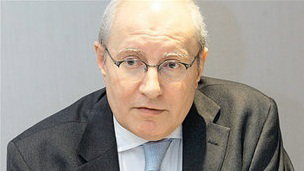

“When everybody cut costs through restructuring, we boosted our sales force, raised their wages, and so managed to expand our portfolio of clients and of distribution routes. Despite the around 3% consumption decline last year, we boosted spending, sought to support our clients more and better, and this brought us growth,” Sherif says.
Interbrands is the largest FMCG distribution company on the local market, with net sales of 498 million lei (EUR112 million) last year, 15% more against the previous year. The company intermediated sales worth RON6.5 billion (EUR1.5 billion), 25% more than in the preceding year, as cigarette smuggling declined.
Interbrands is the distributor of Kent cigarettes (manufactured by British American Tobacco, leader of the local cigarette market) since back in 1997, after which the company expanded its portfolio of clients, to include companies such as Kotanyi, Procter&Gamble, Henkel, Nestle Nutrition, Love Plus, Tchibo, 3M, Comceh, Kraft Foods, and Angelli.
The company went through an extensive restructuring between 2007 and 2009, before the crisis, which entailed the firing of 500 employees and the closing down of one third of the distribution centers operated in 2006. Sherif says it was hardest for him to fire “decent” employees, but that “he could not stop the firm from evolving if the best decision was to restructure.”
Decisions are made over coffee or cigarettes
The CEO of the largest FMCG distributor decided against corporate management practices in his company. For instance, most top management employees were promoted from within, whereas multinationals often resort to executive search firms to fill top executive jobs.
“I was a part of the corporate world, but I abandoned it in order to apply a management model under which I would say business is done in a the most efficient and fun way possible. We don’t use memos, Power Point presentations or e-mails. We solve problems and think about solutions through conversations, either at the office, in the smoking area or in the cafeteria,” says Sherif, who adds that last year management had one meeting every two months on average.
Almost half the top management team of Interbrands started their career in sales, hence the company’s focus on strategies to motivate personnel working in this department.
“The consumption trend is best seen in dog food sales”
Rand Sherif says the best indicator for the trend of consumption comes from pet food sales, which is something he noticed when his company would distribute such products.
“When pet food sales went up, so did consumption, when they fell, consumption also fell. (…) This is because someone who is cash-strapped would rather cut the cost of sophisticated pet food, rather than spend less on food for their family. It is a simple barometer, not a scientific explanation.”
As for 2012 plans, Sherif says Interbrands will continue the process of expanding its product portfolio, as well as delivery areas, and will seek to tap the opportunities of the online segment. The company has already launched an online store – ShopiDoki and is in the process of finalizing food products under the Interbrands name, which will be sold in convenience stores.
Interbrands started out on the Romanian market in 1993 and is one of the largest firms in the Sarkis Group International headquartered in Beirut (Lebanon). (EUR1=RON4.354)
(Engish version by Daniela Stoican)