
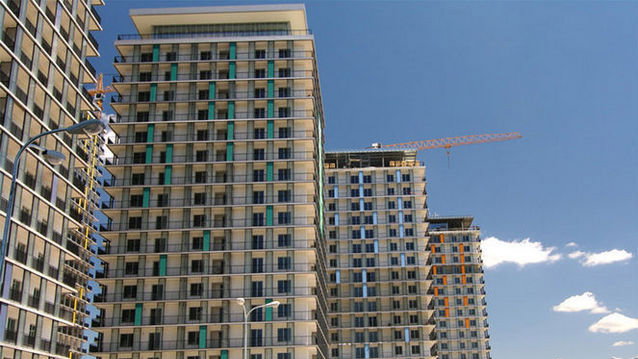
These projects entailed over EUR300 million in cumulated investments and make up more than half the number of homes built in the Bucharest-Ilfov area in a year’s time (6,700 units in 2010). The impact on the market has been devastating and discouraging for all those involved, from investors through to financing banks, and to prospective clients who are now afraid to buy apartments in non-finalized projects.
The largest complexes in this situation are Planorama in Colentina district and Asmita Gardens on Splaiul Unirii, but most insolvent projects are in northern Bucharest and in adjacent small towns, such as Voluntari and Tunari. ZF took into consideration projects for which developers had started construction and had at least signed pre-contracts for the sale of the apartments, by accessing bank loans.
The apartment projects that went insolvent were developed by companies from India, Australia, Israel, Spain and Turkey, and less by Romanian developers, who either went ahead with their projects in order not to stain their reputation on the market, or halted their projects before causing losses to banks and to prospective clients.
Insolvency affected both lower-priced apartment projects, such as Planorama, where apartments used to sell for around EUR900 per square meter, and complexes considered to be luxury ones, such as Alia Apartments (nearby Arcul de Triumf triumphal arch, Cortina Residence (Baneasa) and Ibiza Sol (Pipera). The latest case was that of Alia Immobiliaria, the Spanish developer that built a project of three blocks with 124 apartments on Maresal Averescu street, but two years after finalizing works, had only managed to sell half the homes.
The developer with the largest number of insolvent apartment projects is Australian company Pacific, controlled by the Prelea family. Bankruptcy was declared for two of the Tunari-based projects of the Australian company – Melbourne and Adelaide, which means several tens of apartments would be liquidated. In fact, so far no major real estate project on the local market has managed to reorganize its operations, which means that sooner or later each of the insolvent or bankrupt projects could end up liquidating the apartments, either in a package deal or on a case by case basis. The market could reach balance if new reference prices were set, based on the values at which these apartments would be sold to the end users, an indicator that was ignored by most real estate developers during the time when the market was growing.
(English version by Daniela Stoican)