
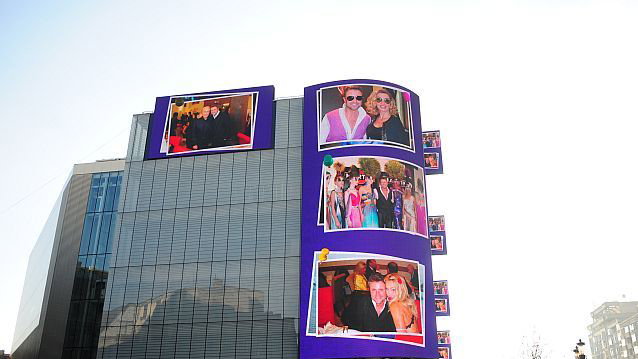
After having spent EUR24.5 million on upgrading the property, Cocor ended up posting losses and having trouble repaying its EUR19 million investment loan that it took from BCR in 2009. In addition, the average rate of EUR22.5 per square meter collected in 2011 is half of the rent it would get before the whole refurbishment process, while take-up stands at 66% of the lettable area (10,000 square meters) and the number of visitors is much lower than expected at the opening.
The company is trying to rethink its commercial strategy to attract more visitors and improve take-up and rent, but the lender has run out of patience after two years during which Cocor has been unable to rebound.
“Talks with BCR officials came to the conclusion that, unless an amicable solution is found, the company may be foreclosed on,” Cocor officials announced in a report sent to the Bucharest Stock Exchange on Monday.
Cocor hired real estate consultants DTZ Equinox and Jones Lang LaSalle in September 2011 to find new tenants and help it change its strategy, while BCR was keeping a close eye on the process.
Cocor has recently announced it would open a multiplex cinema on the top floor as part of an entertainment area, and will also sign a contract with a major fashion retailer, which will serve as an anchor, market sources say. The company thus hopes to reposition and regain the ground lost over the past year.
Cocor and BCR officials had not answered ZF’s questions by the time the story was ready for posting.
Although dusty on the outside and crowded on the inside because of small shops and almost unchanged eighteen years after the fall of communism, Cocor was full of people every day.
However, shareholders and management had big plans for a radical change of the look and concept of the store to bring it up to the standards of the malls built after 1989 and to attract a new category of shoppers: the affluent people talking a walk through downtown Bucharest.
This is why the EUR24.5 million investment in 2008 and 2009 in a thorough makeover of Cocor, which retained only the frame of the old building. It got a glass facade, as well as a media facade, which its owner touted as the biggest in Eastern Europe. Cocor also built a multi-level parking lot behind the store, something the old building did not have.
The store itself was repartitioned into larger spaces, similar to those in malls. Cocor’s management initially set out to attract luxury brands such as Gucci, Versace and Prada, which should have replaced the old clothing shops selling items bought from wholesale markets or the lamp and curtain shops. The crisis came and plans no longer materialized.
Cocor then changed strategy and concept, going for Romanian brands instead and turning from Cocor Luxury Store into Cocor Department Store. The change of concept caused conflicts between minority shareholders and the management, backed by investment fund Broadhurst and Liviu Ursan and Daniel Stoica.
Aurel Besliu, the former chairman of Cocor in late 1990s and early 2000s had other plans. He suggested adding several floors on top of the existing ones and developing office space and a hotel on the top floors to complement the shopping space on the lower levels.
It reopened on October 1, 2010, offering 10,000 square meters of space for rent instead of the previous 6,000. Take-up stood at 85% and the average rent at EUR47 plus VAT per square meter, and Cocor expected rents to go up to EUR52.23/sqm by 2012. Estimates turned out to be too optimistic, the crisis hurt the strategy of the company and Cocor cut the average rent to EUR22.5/sqm only to keep the tenants that were unhappy about the very low number of visitors and poor sales.
Many people believe the strategy behind the “new Cocor” was not the best possible right from the start. Others blame the failure on the crisis that hit the real estate market in 2008.
“Maybe their initial plans did not materialize because of the crisis. Many shopping centers had significant investment made in 2008 and 2009 at the height of the crisis and are now struggling to change their strategy and reposition because they are having big problems,” said a real estate analyst who opted to not be named. “Cocor is one of them. Looking back it’s easy to draw conclusions and find causes but we must also ask ourselves how did 2013 look in 2007 when they designed the investment.”
Consultants also say the decline in rent compared with the period before the upgrade of Cocor is not that surprising.
“What they had before was a lot of relatively small shops. It is a known fact that rent for small shops is higher than for larger shops.”
In addition, the crisis made many Romanians switch to cheaper products, therefore products that the shops inside the old Cocor sold are probably in higher demand than those available there now.
Rent income decline also affected Unirea Shopping Center, which is close to Cocor and controlled by the Adamescu family. The average rent in Unirea fell to EUR28 per square meter in 2011 from EUR32/sqm in 2010 and EUR39/sqm in 2009, as the company dropped many of the old tenants renting small spaces to make room for large stores like Zara, H&M and Leonardo. Unirea’s revenue therefore went down from RON97.8 million in 2009 to RON78.6 million in 2011.
On the other hand, another communist store, Bucur Obor, kept the old small shop model and a tenant mix that includes small dry goods shops and key duplicating stands, as well as shoe sellers and jewelry shops, and its revenue is now higher than Cocor’s.
(English version by Loredana Fratila-Cristescu)