
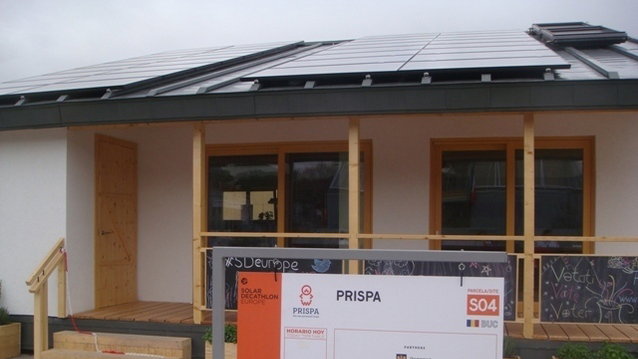
This technical permit is an important step, and after the works for joining the network are completed, Prispa will become a producer of solar energy able to inject its energy surplus into the national grid.
The permit has a three-month validity and the Bacau-based family is due to pay a fee for joining the grid and seal a contract to join within this period.
“The permit is the most important one. Basically this document certifies that Prispa can deliver energy into the grid and will be recognized as a producer,” explains Pierre Bortnowski, who coordinated the team that developed Prispa as project manager. He adds that the true victory will be when the house is “physically” connected to the grid.
“I don’t know if after this step we will witness an accelerated development of homes of this type because you don’t build a house just to produce energy, but it is definitely a direction,” he says.
The Prispa project first gained wider popularity last year, when the university students that imagined this house participated in the Solar Decathlon. This is one of the largest global competitions between universities, where various projects for homes that can produce solar energy are pitched against one another.
The team of 45, who are students at the Technical University of Civil Engineering in Bucharest, at the Ion Mincu University of Architecture and Urbanism, at the Polytechnics University in Bucharest and at the National University of Arts, proposed a simple project, whose cost is EUR70,000, the lowest out of all projects that participated in the competition.
In fact the Prispa house was the only house in the contest to find a buyer, the Bacau-based family. At the end of the competition the Prispa house ranked 9th out of 18.
(English version by Daniela Stoican)