
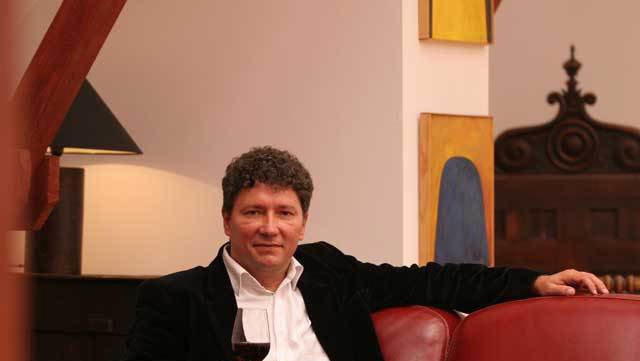
China is the fourth most important export destination of Halewood, a company that has 350 hectares of vineyard in Dealu Mare, Sebes and Murfatlar, and drew the winemaker’s attention after a surge in consumption in recent years.
“China will become the largest market in the world in ten years but that will also depend on the size of the middle class forming there. I estimate about 200 million Chinese will be able to afford to buy wine, but very few of them actually drink it because they have a lot of their own beverages,” Dan Muntean told ZF in an interview.
“Surprisingly, China has also become one of the largest winemakers because it keeps planting all the time though not always in well-chosen places.”
The largest wine market in the world is United States, with consumption coming close to 31 million hectoliters last year, according to the International Organization of Vine and Wine (OIV), up 2% on 2013, while France came in second, with almost 28 million hectoliters and China ranked fifth, with 16 million.
On the other hand, China is the second most important export market for Romanian wineries, with almost 1.2 million hectoliters sold there last year, and generating EUR2.8 million revenue.
“Up until 2010, Romania’s market was bigger than China’s and Russia’s,” Halewood Romania’s general manager said.
He estimates Romania is now among the 15 largest wine drinking countries in the world, ahead of Portugal and Australia. Its market has shrank by 5% compared with 2010, when sales reached 55 million 12-bottle cartons (almost 5 million hectoliter consumption), Halewood Romania official said.
“In only five years, China has seen consumption skyrocket. We have about 15 different customers in China. We are talking about a less mature market, which means distribution structure is different, there are no channels as we know them, there are no wine shop chains. We want to be there because this market will continue to skyrocket. Moreover, they are feeling the crisis, too, and starting to shift from more expansive to more popular wines.”
China is a profitable business, Halewood’s general manager says, because it is not a mature market yet, like the United Kingdom for instance, where everybody wants to be and the fight for every piece of the market is fierce.
The United Kingdom remains Halewood’s biggest export market, though, as the company is owned by UK-based Halewood group. Exports to this market stood at 1.3 million bottles, out of a total 3 million sold abroad. Second is Estonia, third is Germany and China ranks fourth.
One of the new markets for the company is Finland. Dan Muntean explains that the Finance Ministry does all the wine imports of the country (a government monopoly), something that happens in other parts of Europe or the world. The Finance Ministry is the wine importer in Norway, Sweden, Iceland, as well as in Canada, where every province has its own monopoly because the government wants control over alcohol sales.
“We are still targeting the monopolies in Canada and participating in tenders. Our most important areas are Ontario and Quebec, where we do deliveries but very small amounts. We are also interested to continue to develop in the US; we started small there but I think we’ll triple in 2015 compared with 2014.”
The company is also interested in Switzerland, Brazil and Mexico.
UK’s Halewood first entered Romania in 1987 when it began importing wines and then started its local operations together with Dan Muntean. Halewood has four divisions in this country at the moment, which specialize in managing vineyards and production and sale of wine in Romania and abroad.
“We don’t expect spectacular growth in this industry, our sales have remained at EUR10 million to EUR12 million for ten years. Our market is governed by the fact that a certain number of hectares of vineyard can only produce so much. Our plan is not necessarily to boost volumes but profitability, which can only be done on long term. Exports give us some security and I think Romania has a great export potential.”
(English version by Loredana Fratila-Cristescu)