
The country has managed in less than three years to reach a capacity of renewable energy of almost 1,400 MW, equivalent to that of the two nuclear reactors in Cernavoda (SE Romania), which account for almost 20% of national consumption.
In total the renewable energy sector has attracted investments of over EUR2 billion. Wind, sun, biomass and water energy are attractive mainly thanks to the very generous support scheme made available by the Romanian state.
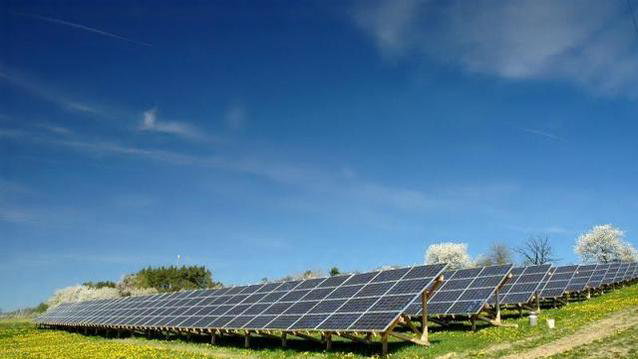
“At present in Romania there are 1,390.4 MW installed in renewable energy, distributed as follows: wind energy – 1,362.3 MW, biomass – 26 MW, solar energy – 2 MW,” say representatives of Transelectrica, the national energy transmission company, an entity that plays a key part in integrating energy projects into the national system.
Installing one MW in a wind farm requires investments of around EUR1.5 million, while each MW in a solar or biomass project costs around EUR2 million. So, in order to install the “two green reactors,” investments of over EUR2 billion were made, with the boom of renewable energy starting as late as in 2009 in Romania. Data sent by Transelectrica shows that investor appetite for wind energy is still high, with over 700 MW of wind energy to be added to the system by the end of this year alone. This is equivalent to the capacity of a Cernavoda nuclear reactor.
“The total installed capacity of wind farms is set to be 2,100 MW by the end of 2012,” specifies the national energy transmission company.
Investments of over EUR1 billion will be needed in order to reach this capacity.
The star of the last 20 years
Green energy has been the main focus of the Romanian energy generation market in the past few years, considering that aside from the two Cernavoda reactors and the gas-powered station that Petrom has recently started operating in Brazi, nothing worthy of mention has been built in the last 20 years. Apart from the good weather conditions – the strong wind in Dobrogea and Moldavia and the significant potential on the solar segment – another element has drawn investors to the Romanian market – the country boasts one of the most generous green energy support schemes in Europe. The system is based on green certificates and on mandatory quotas.
Starting last year each MWh of green energy delivered into the system is rewarded with a different number of green certificates whose value is set by law at between EUR27 and EUR55. Two such certificates are awarded for wind energy. Up until last year, though, each MWh of green energy was rewarded with one single certificate, irrespective of the technology used, whether it is wind energy, solar energy or biomass.
These certificates are then bought by electricity suppliers, such as Electrica Furnizare, which are required to have a certain percentage of renewable energy in the basket delivered to clients. The number of certificates bought is proof that this quota has been met. But this is an additional cost for suppliers, and will be transferred into the bill paid by the population and by companies. So, the actual supporters of green energy are ultimately energy consumers, with the total value of this support scheme being estimated at around EUR10 billion by 2020. The duration of the scheme is 15 years. It was put together because Romania, as an EU member, has to meet a certain quota of green energy to its national energy consumption by 2020.
At the same time, investments in renewable energy are more expensive than those in conventional energy projects so in the absence of a support scheme, these projects would not have been attractive for investors. For instance, producers of wind energy receive 2 green certificates for each MWh, while companies that invest in solar projects are rewarded with 6 certificates.
Transelectrica data also shows that from the beginning of the year until July over 3 million green certificates have been issued for renewable energy production, worth almost EUR170 million. In fact a survey by consultancy Ernst & Young places Romania at no. 13 in the ranking of the most attractive countries for investments in renewable energies, with the support scheme being the main ingredient that contributed to the development of this industry.
The largest wind farms built so far in Romania belong to giants CEZ (the Czech Republic), Iberdrola (Spain) and Enel Green Power (Italy), but market specialists expect solar farms to take precedence in the coming years.
(English version by Daniela Stoican)