
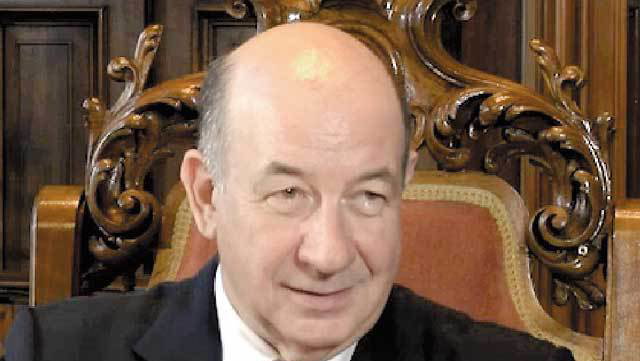
“’Romania is unable to meet its obligations and as such will approach the Paris and London Clubs to have its debt restructured’ was the message conveyed in English, French and German,” Ghetea said on ZF Live, recalling the most difficult moment of his career.
“It was a difficult night. I realized Romania may go through a very difficult time but I didn’t imagine it would be that difficult. At the moment, I did not realize what was in store for us as a nation. We had no money, but we undertook to repay it and repaid everything by March 1989. Paying the foreign debt in advance was a huge mistake.”
Radu Gratian Ghetea, 66, is the first banker who announces retirement of the generation of those who built the banking system in Romania and accepted it had to be given up to foreigners because, he says, “Romanians did not have the expertise”. He sent the message in his position as head of the IT department of the BRCE where he had taken a job as computer specialist in 1977.
“I was supervising the telex activity and sending a message to all the 2,600 correspondent banks that Romania no longer has any money… that was hard. It was a message devised by the Board of Directors at the time– it was called the Executive Bureau. I wasn’t a member but I was the first outside this Bureau to learn about the decision,” Ghetea recalls.
Ghetea later moved up the ladder to a management position with BRCE, built and run Alpha Bank Romania between 1993 and 2007 and in 2007 was appointed CEC president by the then Finance Minister Sebastian Vladescu.
During his term, CEC turned into a commercial bank, introducing lending to corporate customers, as well.
CEC’s market share by assets rose from 4% to 7% in 2007-2014, and the bank climbed from 9th to 6th in the system. Profitability, however, halved from 98 million lei in 2007 to RON56 million in 2013, according to the latest available data.
(English version by Loredana Fratila-Cristescu)