
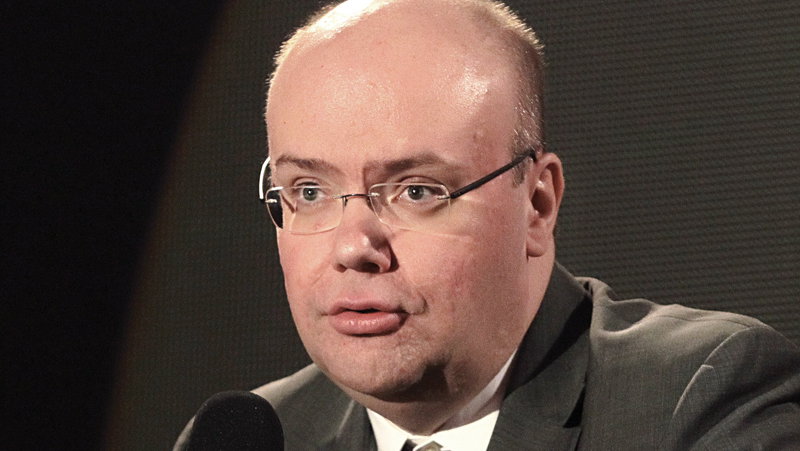
Stab says that in the current market investors in the sector are not easy to attract, either, due to the fierce competition of the countries over major companies’ money.
“I am Romania’s ambassador to Paris for the development projects of the company I represent. This is how it goes. I have 30 minutes to present the opportunities here to my bosses and my presentation comes after the presentations of other ‘ambassadors’ from Brazil and Thailand,” Stab says.
The competition over financing is fierce and, unfortunately, the executive does not have a satisfactory history to help his case, Stab added, considering the latest developments in the renewable energy sector (the clean energy support scheme cut as of July 1 i.e.).
“It is too soon to say whether we regret our investments in wind farms or not.”
The problem is that the decision produced effects retroactively. The change of the support scheme is a legitimate decision but it is a problem when rules change during the game and affect those who have already invested, GDF SUEZ Energy Romania CEO said.
The legislative change caught GDF SUEZ Energy with two wind farms in Romania. The company first started in the wind farm sector early last year when it bought a 48 MW project in Braila. The farm is already completed and GDF SUEZ Energy Romania also bought another 50 MW project in Galati some time by the end of 2012, where it announced would invest EUR90 million. In all, the two farms require more than EUR160 million investment.
The two investments are no longer profitable now. Solar power remains a stable business, but the motivation to invest in wind power is no longer there. Signals must come to restore the confidence in Romania’s energy sector, or else no one will invest any more, Stab said.
Although green power investments do not generate the returns promised, GDF SUEZ Energy Romania had a first half with significantly higher profitability than in the same time last year. The company posted 352.5 million lei (EUR79.5 million) net profit, 35% higher than the year-ago period, even though its revenue shrank by 5% to RON2.2 billion in the first half. The profit margin was almost 16%, nearly double the 2012 level.
Natural gas consumption fell 8% in the first half, while demand for electricity shrank by 7%. The most important factors that caused the decline were the milder winter and the cooler summer this year, as well as the overall performance of the economy. This hurt the business of GDF SUEZ Energy Romania, too.
One of the factors that helped net profit rise was the renegotiation of Russian gas import contracts. The top supplier of Russian gas for GDF SUEZ Energy Romania is WIEE, a joint venture of Gazprom and Germany’s Wintershall.
“To see electricity and natural gas consumption increase again, we believe we need GDP growth of least 3% a year for a longer period of time,” Stab believes.
The executive says his company is already working on next year’s budget, and one of the biggest challenges faced is the deregulation of natural gas prices. Domestic gas should be 2.5 times more expensive for industrial consumers than at the end of last year, according to the schedule set by international financial institutions. Deregulation for household consumers should end in 2018.
One of the biggest challenges of 2014 is how consumers will cope with a new year of deregulation. It is never a good time to raise prices and now less than ever. Moreover, dealing with two deregulations at once (power and gas) is difficult, but there is hardly any option, Stab says.
GDF SUEZ Energy Romania does not see the price hikes as a good thing because clients have trouble paying their bills and cut consumption. The company does not make any money from the deregulation of power prices, the gas producers do, he added. Romania’s biggest gas producers are OMV Petrom (SNP.RO) and Romgaz (SNG.RO).
GDF SUEZ Energy Romania is the company created around the former Distrigaz Sud, which the former bought from the government in 2005. GDF SUEZ Energy is currently employing 3,600 people.
(English version by Loredana Fratila-Cristescu)