
In the next period, nine out of ten food retailers have plans to expand current logistical spaces or to invest in optimizing their logistics.
“As regards our existing warehouses, we are constantly investing to upgrade and increase our capacity. This year alone we invested EUR2 million in infrastructure and machinery upgrades and expansion. Expansions are planned for the short and medium terms , over the next five years,” said Valer Hancas, communications and corporate affairs manager of Kaufland Romania.
The German retailer owns two logistical properties totaling over 190,000 sqm of storage, one in Turda and one in Ploiesti, which serve its countrywide network of 126 stores.
By Logistical area, Kaufland ranks second after Lidl, its sister company, which owns 22 hectares of warehousing.
Other retailers who prefer to own their storage facilities are Mega Image and Penny Market, while the rest rent their storage.
Investments in owning warehousing amount to around EUR20 million for 2-3 hectares.
Nearly all players on the food retail market plan to expand storage capabilities.
Selgros officials said the company is currently optimizing its logistics in terms of store supply and deliveries. Selgros uses around 1.8 hectares of logistical space.
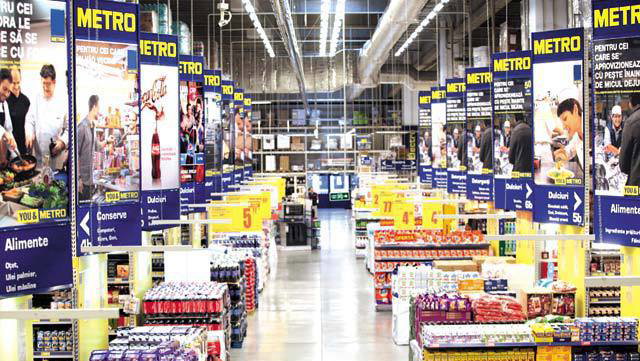
Metro is set to triple its logistical space to 10 hectares with the completion of a EUR33 million central warehouse in Stefaneștii de Jos in the first quarter of 2020. The warehouse will be leased from WDP.
At the same time, Auchan will lease a 7.7-hectare warehouse near Bucharest from WDP, a project that will cost EUR45 million.
Carrefour and Profi plan similar expansions, while Mega Image is set to double its storage in Stefanestii de Jos to 8 hectares, reaching a total logistical area of 12 hectares.
Cora, the smallest player by sales and having the fewest stores, has not announced any expansion plans on the logistical side.