
The revenues collected by the 20 largest private universities were down last year to EUR103 million, against EUR196 million in 2008. During the same period, the budget surpluses of these universities – the equivalent of companies’ profits – fell almost 14-fold against 2008 – the glory year for the Romanian higher education system – to EUR5.3 million, shows data centralized by ZF based on balance sheets submitted by the universities to the Finance Ministry.
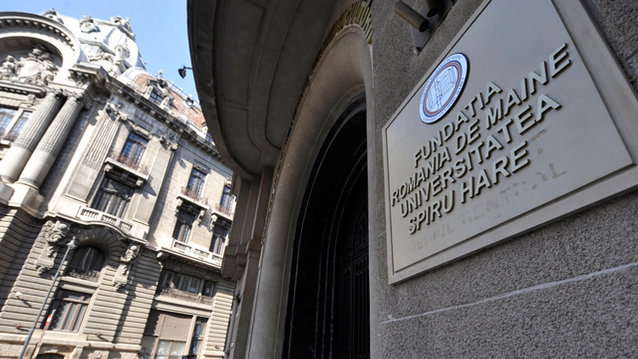
The most dramatic decline was recorded by private university Spiru Haret, which however remained leader of the higher education private market in 2012, with a revenue of over EUR32 million and a surplus of EUR400,000.
In 2008 the institution had a revenue of over EUR100 million and a surplus of almost EUR50 million. But a diploma-related scandal and the decline in the number of high school graduates caused the university to lose ground.
“In addition to the decline in the number of high school diploma graduates, I think the revenue decline of private universities is also a consequence of the fact that young people realized getting a diploma just for the sake of it is not enough and took jobs straight out of high school,” believes Florin Godean, country manager of recruitment and temporary work company Adecco Romania, with a turnover of over EUR40 million last year and over 5,000 employees.
The number of students in private faculties also fell. While in 2008 over 400,000 students supplied private universities with revenues, in the 2011-2012 school year their number fell to 140,000, according to data from the National Statistics Institute. The number of students of state universities also declined, but at a slower pace, from 480,000 in 2008 to almost 400,000 in the 2011-2012 school year.
The law that regulates the functioning of universities says the purpose of educational institutions cannot be to make a profit. However, the budget surpluses reported by the largest private universities in Romania exceeded 30-40% of revenues collected in 2008.The situation drastically changed in 2012, when only three universities – Titu Maiorescu, Dimitrie Cantemir and Universitatea Ecologica reported surpluses of over EUR1 million.
Will private universities still exist in the future?
Romanian private universities have for many years been considered an alternative for high school graduates unable to get a place in a state university, which have a better reputation than private institutions.
The easier access to private universities, which accepted students based on their high school diplomas, prompted many high school graduates to turn to private institutions, rather than to state-run universities. Even fees charged by the private universities were sometimes lower than those charged by state universities for a limited number of their places.
“After 1990 we saw a significant rise in the number of universities. The number of state universities tripled and in parallel a private higher education system started to develop. But as of 2008 those born after 1990 started to go into university. Their number is staggeringly lower than previous generations, and this affected the entire education system, not just the private one,” explains Dumitru Miron, dean of the Faculty of International Business and Economics within the Bucharest Academy of Economic Studies (ASE).
He says the universities that will survive will be those best able to meet demand on the labor market, irrespective of whether they are private or state-run.
(English version by Daniela Stoican)