
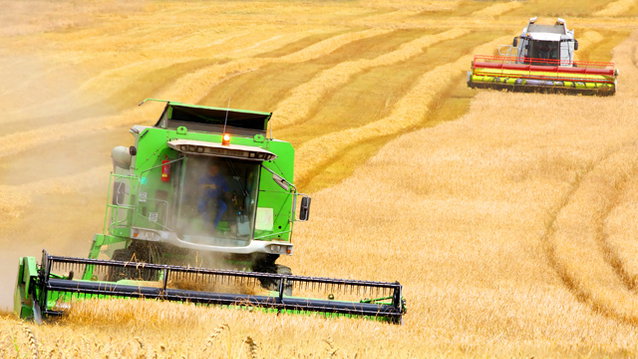
As a result, the sector–which accounts for 6% or 7% of the country’s gross domestic product–contributed about 1.6-1.7 percentage points of the 3.5% economic growth last year. It also means that the effects of the about EUR10 billion entering the agricultural sector in 2008-2013, EUR4 billion of which as direct payments for farmers and another EUR6 billion for investment projects, are starting to show. The good weather last year also helped.
Despite encouraging macroeconomic data, signals coming from the real economy seem less optimistic. Businesspeople are still skeptical about the effects the economic recovery will have on their businesses. Then there is also the question of when Romanian consumers will actually feel the rebound of the country’s economy, when their living standards will improve.
“Romania’s 2013 performance is remarkable, but the question remains: how much of this economic growth showed in consumers’ incomes and in companies’ revenue,” said Eugen Sinca, chief analyst of Romania’s largest bank, BCR.
“We believe the economy needs new stimuli to boost consumer spending and investment both by a cut of the minimal mandatory reserves and by an increase in public investments funded by the money collected from combating tax evasion.”
Although the economic activity picked up, the improvement did not make much of an impact on the tax level, because the growth relied on exports and an agricultural sector largely not subject to taxes, while consumer spending was sluggish, which showed in the VAT receipts.
Exports reached an all-time high of almost EUR50 billion last year, having gone up 10% and analysts expect them to remain one of the main growth drivers for Romania, considering the recovery of the euro zone economies, which are the country’s main trade partners.
Industry has increased its contribution to GDP formation in the last five years via exports, after a decline in 2003-2008. Yet industry cannot drive the economy forward on its own, considering it only accounts for one third of the GDP. Under the circumstances, domestic demand should pick up, too, if the economy is to grow at a rate of more than 3%.
The agricultural sector contributed EUR18.5 billion to the economy in 2013, close to the 2011 and 2008 peaks. The gross value added that farmers generated stood at almost EUR8 billion, the third best result in the last seven years. Agriculture is a very volatile component of the GDP because it is almost completely dependent on weather conditions. Its share of the GDP went down from about 11% in 2003 to 6.6% in 2008 and 5.3% in 2012, but may have gone up to 6% last year.
Analysts expect the economic growth to slow down to about 2.3% in 2014, and continue to be driven by export demand and a gradual recovery of domestic demand, while agriculture will no longer be as important.
A country like Romania needs an economic growth of at least 3% to 4% a year to narrow the structural gaps and come close to the living standards in the euro zone, analysts and International Monetary Fund representatives say.
(English version by Loredana Fratila-Cristescu)