
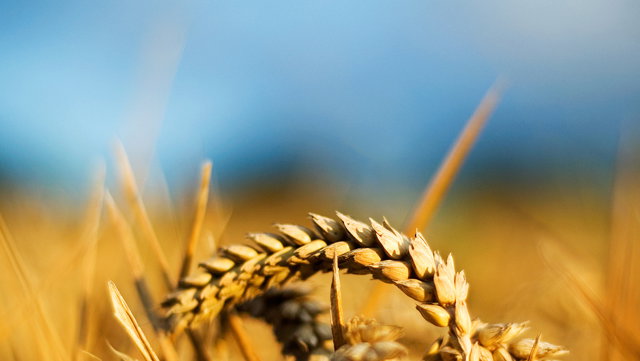
Another reason for their bet on wheat is that Russia and Ukraine, Romania’s direct competitors in the Black Sea region are having trouble due the weather. A wheat deficit on the two markets means higher prices in the area.
“I will plant as much wheat as I can, as long as the weather allows it. I had 4,000 hectares of wheat last year. I am not done sowing yet, we have been delayed but if weather allows it I will plant more than that,” says Dimitrie Musca, general manager of Combinatul Agroindustrial Curtici, a 7,500 hectare farm with EUR18.4 million yearly revenue.
Romanian farmers usually allocate 1.9 million to 2 million hectares to wheat crops, which makes an about EUR1 billion market a year.
The fall planting (of wheat, barley and rapeseed) is in full gear and September and October are the months when companies in this business make projections for the next season.
Farmers have two weeks left at best to plant the wheat at the most suitable time for its development so as to see productivity peak. Missing this window of opportunity means higher costs and higher risk of some plants not being able to survive the winter. Romania usually produces 5 million to 7 million tons of wheat per season.
The land split among the main types of crops – wheat, barley, corn, rapeseed and sunflower, will shape projections about potential revenue and margins.
“We use a crop rotation system we decided on a long time ago and will not modify it too much. We will have 36,000 hectares allocated to fall crops (wheat, barley and rapeseed) and 12,000 hectares planted in the spring (corn, sunflower, soy),” explains Lucian Buzdugan, general manager of TCE 3 Brazi in the Great Braila Island (SE Romania).
He says that although he will not change much of the risk distribution strategy, he will focus on boosting wheat productivity by improving soil water retention.
“We will therefore work on cutting costs but will use Romanian wheat varieties as in the last few years, which have shown potential and have a 8 ton to 9 ton/hectare productivity.”
The rainy autumn in Russia and Ukraine will influence the grain market next summer. The two former Soviet economies known as the top two wheat producers in the region and the main influence on prices, are having trouble with fall planting. Russians are already talking about this being the rainiest autumn in eighty years and a 15% to 20% decline in next year’s wheat production.
While the Russian and Ukrainian farmers can balance potential wheat losses with planting more corn and sunflower, local farmers cannot do the same easily.
The two crops, corn and sunflower, will become riskier as of next year, now that the European Commission has banned use of neonicotinoid-type pesticides, considered a threat to bees. The lack of neonicotinoid treatment leaves corn and sunflower vulnerable, which means higher costs or even the loss of the entire crop if there are not enough seeds available on the market for replanting.
Romania’s grain production reached 19.1 million ton this fall, 50% better than the poor harvest of 2012. The local economy ranks second in the EU by corn production, 11 million tons and is one of the top ten wheat producers with 7.2 million tons.
(English version by Loredana Fratila-Cristescu)