
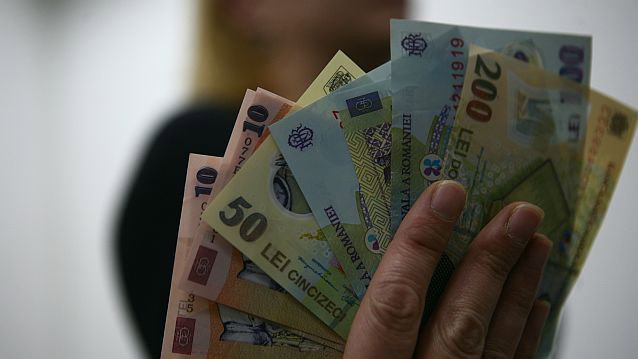
Hourly labor costs rose by 1.9% in the EU28 in the fourth quarter of 2015, compared with the same quarter of the previous year.
In the fourth quarter of 2015, the highest annual increases in hourly labor costs for the whole economy were registered in Romania (+11.4%), the Czech Republic (+8.6%), Latvia (+7.7%), Bulgaria (+5.8%), Slovakia (+5.3%) and Austria (+5.2%). Decreases were recorded in Italy and Cyprus (both -0.8%), the Netherlands (-0.4%) and Luxembourg (-0.1%).
Hourly labor costs rose by 1.3% in the euro area (EA19) in the fourth quarter of 2015, compared with the same period of 2014. In terms of economic activity, hourly labor costs in the euro area rose by 1.2% in industry, by 0.5% in construction, by 1.3% in services and by 1.6% in the (mainly) nonbusiness economy. In the EU28, labor costs per hour grew by 1.7% in industry, by 2.5% in construction, by 2.0% in services and by 1.7% in the (mainly) non-business economy.
The two main components of labor costs are wages & salaries and non-wage costs.
The Labor Cost Index is a short-term indicator showing the development of hourly labor costs incurred by employers, in nominal terms, that is without adjusting for price developments. It is calculated dividing the labor cost in national currency by the number of hours worked. Therefore, the development of variables, labor costs and hours worked, affect the evolution of the index (base year = 2012).
Currently, a company spends in Romania, on each employee, nearly EUR5 for each hour worked per worker, while in Germany, the average labor cost reaches nearly EUR32 per hour, which is six times higher than in Romania.