


The reformation of the healthcare system, through a draft law put up for public debate, had major reverberations in the public opinion, with people taking to the streets, first in Targu Mures, then in several cities across the country, including in Bucharest. Things unfolded at a faster pace in the past few days, with president Traian Basescu asking for the law to be withdrawn from public debate, which led to countless controversies.
The announcement has consequences both of a political nature and in the health sector because the reformation of the system will continue to be an issue, prospectively with pilot programs and the expansion of tax deduction of voluntary health insurance.
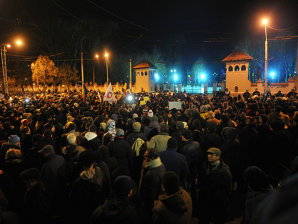 Tensions that appeared in the past few days also showed the inability of the initiators to endorse their draft and the lack of dialogue with public opinion. After the president’s announcement, none of the initiators publicly defended the law.
In healthcare, public funds amount to around EUR5.5 billion of which the budget of the Health Ministry is EUR1.3 billion and the money collected by the National Health Insurance House CNAS amounts to EUR4.2 billion. The question that arises is where this money is going.
“The system is politically-driven, the system does not manage funds efficiently, the system is corruption-prone. At the moment, these private companies, which you suspect will take over public money, are thriving on public money under the umbrella of the state system,” said president Traian Basescu on Friday, when he called for the withdrawal of the draft law from public debate.
At present there is no transparent analysis of spending in the healthcare system, a report showing where the money is going. Data on hospital contracts are conflicting. The value of contracts with the Health House differs depending on the institution that provides the information: the Ministry, the health insurance house or the hospital. The computerization of the system, which started ten years ago, is advancing at a very slow pace, so there is no integrated reporting, hence the lack of analyses on the healthcare system.
The tensions of the last few days have brought up again the subject of who is responsible for activity in the healthcare sector, considering that there are several entities involved in the activity of hospitals: the Ministry, the Health Insurance House and town halls, for the decentralized hospitals.
The Ministry handles the healthcare policy, so it is involved in healthcare programs, while CNAS finances the healthcare system, i.e. pays the services of hospitals, family physicians and certain drugs from the contributions raised. Theoretically, the health insurance house is coordinated by the Ministry. But there is also a third component to the healthcare system – local administrations, which manage around 350 hospitals. Their role is to finance investments, but they also have a veto right over the management of hospitals.
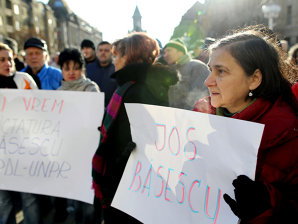 The draft law on reforming the healthcare system has proven the tensest one, being echoed very strongly in the public opinion.
On the other hand, the private sector, doctors, and pharmacists did not reject the draft law, but each had specific observations on their area of practice.
The main changes proposed by this law referred to the appearance of health insurance, i.e. of private entities that were supposed to receive money collected from health contributions and spend them on services contracted by the insured. At the same time, insurers were supposed to compete over the signing of contracts with doctors and hospitals, as well as to draw patients.
(English version by Daniela Stoican)