
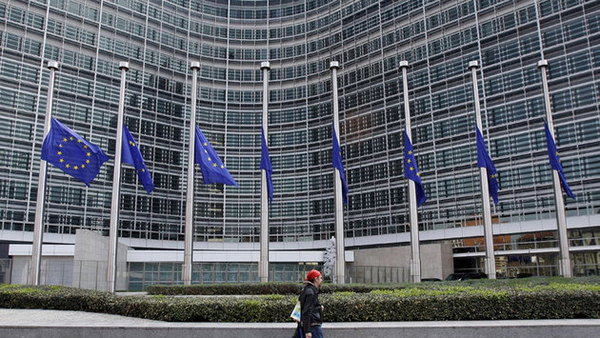
In its assessment of Romania’s convergence and national reform programs which were submitted earlier this year, the Commission noted the east European country has made significant progress in lowering its budget deficit and cutting public expenses.
“The main risks to the convergence program (covering the 2012-2016 period – e.n.) relate to further possible financial corrections linked to the absorption of EU funds, or the financing from the national budget of priority projects, renewed accumulation of arrears, especially at local government level, and limited progress with restructuring of state-owned enterprises,” the Commission said.
Although Romania’s fiscal position has improved, the country still faces major challenges, particularly regarding tax collection efficiency.
“Low tax compliance represents a major challenge for Romania’s tax system, in particular in the areas of the value added tax rate and labor taxation. Environmental taxes are below the EU average,” the document noted.
The Commission recommends Romania improve tax collection by implementing a comprehensive tax compliance strategy and fight undeclared work.
Additionally, the authorities in Bucharest should improve labor market participation and enhance productivity, while stepping up reforms in education, healthcare and public administration, the Commission said.
It said poor administrative capacity is a core concern for Romania, as the public administration is characterized by an inconsistent legal framework, frequent recourse to emergency ordinances, low levels of inter-ministerial cooperation and excessive bureaucracy.
“It is also undermined by a lack of skills, a lack of transparency in staff recruitment and high management turnover rates,” the Commission said, warning that poor administrative capacity contributes to low absorption of EU funds.
The end-2012 absorption target agreed under the EU financial assistance program was missed by a “wide margin,” the document noted.
The Romanian energy and transport industries are two other sectors the Commission red-flagged in its review, saying state-owned companies in these sectors are characterized by inefficiency and intrasparent governance.
“Increasing energy efficiency in buildings, district heating, industry and transport is a further key challenge,” the document said.
Romania is the third most energy-intensive economy in the EU whose energy intensity is 2.5 times higher than the EU average. It is also the third most carbon-intensive economy in the EU, the Commission noted.
Additionally, residential buildings in Romania use eight times more energy than the EU-15 average due to an inefficient district heating system and the fact that buildings are not insulated appropriately, the document said.