
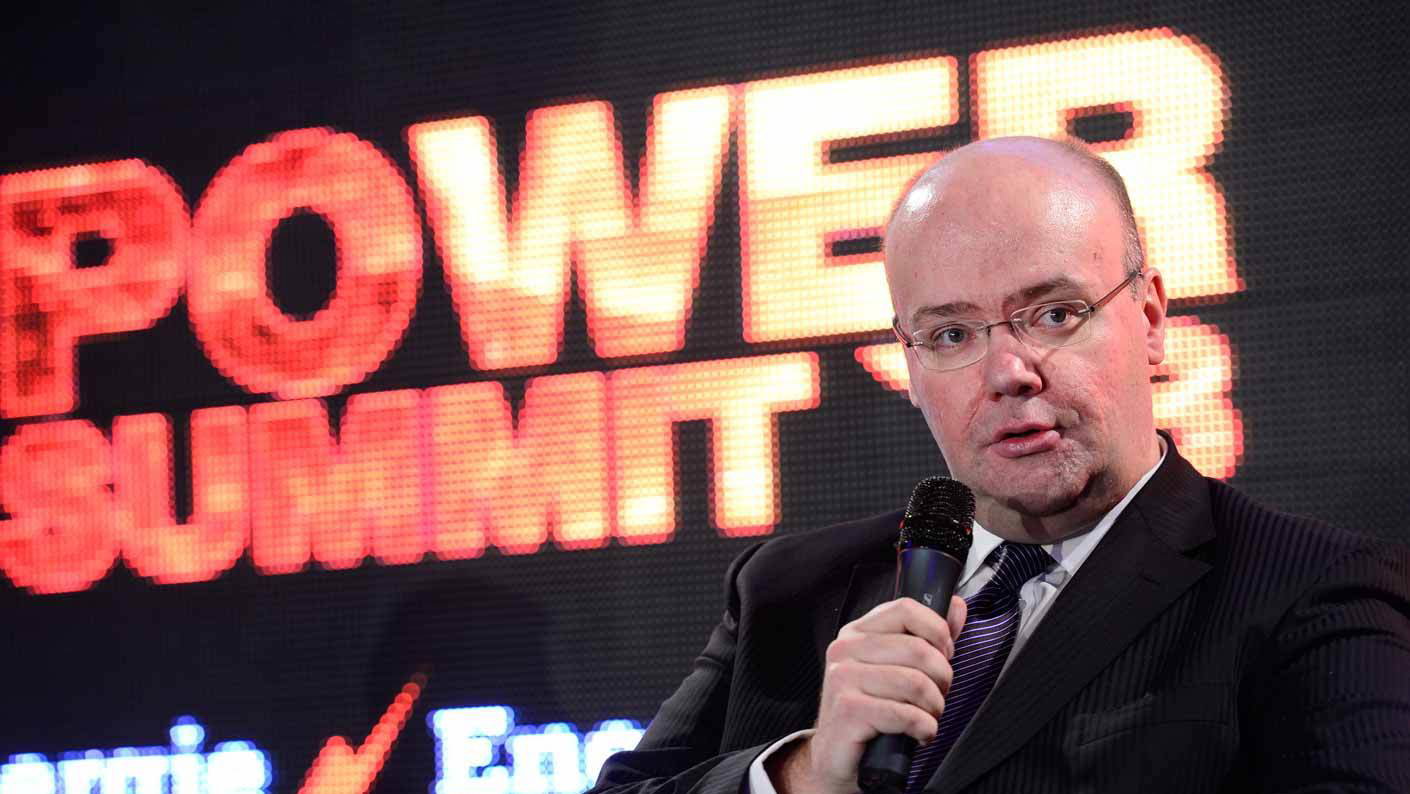
After a new year of sudden policy changes and new taxes, the message conveyed in the first day of the third edition of the ZF Power Summit was “we want predictability and stability”.
“Most utility companies are wondering where to invest. The trend points towards emerging countries outside Europe. It’s hard to say what it means for Romania,” said Eric Stab, chairman and chief executive officer of GDF Suez Energy Romania at the ZF Power Summit ’14 on Tuesday. The executive added he did not expect significant changes about the major players but things would depend on the legislative and regulation framework.
ZF Power Summit ’14 was organized by ZF in partnership with OMV Petrom, GDF SUEZ Energy Romania, Rompetrol, AB Energy Romania, Alpha Bank, Alro, ArcelorMittal, Azomures, CEZ, Electralfa, Enel, ExxonMobil, Marsh Energy Romania, MOL Romania, Nuclearelectrica, PwC, Siemens, Totalsoft and Transelectrica.
So much has changed and so much has not in the last two years, Stab said answering the question about how he saw the development of Romania’s energy sector in the last few years.
Indeed, new renewable energy generation facilities have begun operation in the last few years, and price deregulation started, as well, but the old problems remained: inefficient generation companies, outdated infrastructure, decline in oil and natural gas production. The sector clearly needs investments, but where will investment first go and who will come up with the money? The government organized a tender to for a new energy strategy for Romania, which should outline the avenues for development the sector will pursue for at least twenty years.
“I’ve seen some commenting what’s the use of building nuclear reactors (since consumption is dwindling, i.e.)? We must think about the future, what will happen in twenty or thirty years?” said Minister Delegate for Energy Constantin Nita.
“We want to stop using coal. Fine, but then where will we get the power from? We can’t rely on a single source only, we need a well thought-out mix that the energy strategy should define much more clearly. What is the most efficient mix for Romania? That is the question the company devising the strategy will have to answer.”
Utility companies, too, talked about the need for a clear definition of the energy mix.
“What is the optimal mix of these sources? The government, but I think the Parliament, too, should say, ‘Dear investors, dear consumers, here’s the mix we want and here are the incentives and this is the timeframe we have in mind’,” said Adrian Borotea, corporate affairs director with CEZ Romania.
As far as the government is concerned, the older projects such as expansion of the nuclear power plant in Cernavoda, are moving forward. The private partners of the government in this project backed out one by one. They did it because overall conditions were not good to make firm investment commitments in such projects, Eric Stab said. The investment in Cernavoda reactors 3 and 4 would be the largest industrial project in Romania and it is not easy to spend money on it without clearly knowing what the price will be in the future, he added.
GDF SUEZ backed out of the Cernavoda project a few years ago, and the last private sector partners, ArcelorMittal and Enel, left at the end of last year, too. Romania’s government now wants to continue work on the project with Chinese partners, but Stab warns that the Chinese investors, too, have similar predictability expectations when it comes to regulatory framework.
Although the government expects to see huge projects implemented, the utility company executives expect a new segment on the energy generation market, the decentralized electricity generation by very small producers.
“A clear trend on many markets is individual consumers becoming producers,” said Luca D’Agnese, CEO of Enel Romania. This happens where the degree of renewable energy use by individuals is high, which is not the case in Romania yet, since investments have focused on large plants. In Italy, however, half a million photovoltaic plants are in operation and most of them have a nameplate capacity of 1, 2 or 3 kW, D’Agnese added.
As for major oil companies, they want a predictable fiscal policy in order to decide whether to invest in exploiting resources or in expansion of fuel retail chains.
”We were invited to talks with the authorities but have no proposition yet. We expect to come up with a specific proposition, said Mariana Gheorghe, CEO of Petrom. The oil company is now negotiating with the government a new level of royalties ten years after its privatization.
“When authorities devise a taxation system, they look at numbers. It’s about getting as much revenue as possible from exploiting those resources. The important thing is not the taxation level but the taxation that encourages production. It is in the government’s best interest to get more money and in producers’ best interest to have a predictable system,” Gheorghe added.
The new thing this year on the fuel retail segment is the additional excise duty of 7 eurocents per liter, but companies will also have to deal with the special building structure tax, whose enforcement guidelines have not been clarified yet.
“Any new tax means an additional burden to any investor,” said Kinga Daradics, CEO of MOL Romania.
However, oil company executives expect fuel retail chains and fuel consumption to grow after a time of decline.
“Even though the market saw a decline in the last few years, something obvious in the other European countries, we expect slight growth in the coming years on short and medium term,” said Catalin Dumitru, vice-president of Rompetrol Group, the second leading fuel retailer.
“Growth will come, in a competitive system, from taking over market share from various other players. There are still many independent operators on the retail segment.”
The representative of one of the newest players in fuel retail in Romania, feels the same.
“We expect a certain rebound, because the motorization rate in Romania is not the highest in Europe. Once living standards improve, we expect the number of cars in households to go up, too,” said Ileana Sorina Baltatu, deputy CEO of NIS Petrol.
The company currently has a 14 gas station chain and hopes to double it by yearend.
“Any investment supporting job creation will help the oil sectors’ sales, too,” she added.
(English version by Loredana Fratila-Cristescu)