
Shocks like the one at the beginning of the year, when the power price spiked to record highs on the energy exchange, reaching as much as EUR100/MWh, are due to the lack of generation capacity, besides weather conditions or traders’ activity on the market.
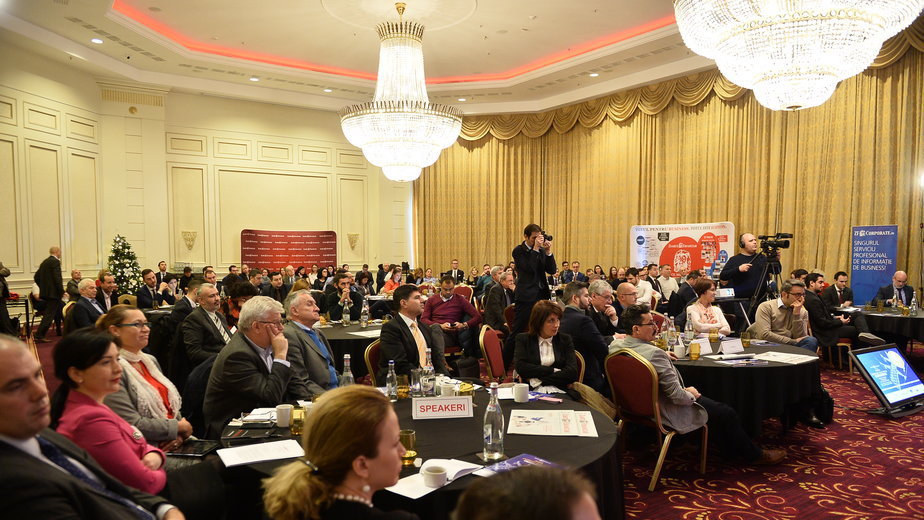
Until new investments start producing effects, which will take a few years, prices remain high as a result of great demand and a rather low supply. These are the conclusions of the ZF conference on the electricity market organized by partnership with Nuclearelectrica, Romgaz, Transelectrica and OMV Petrom on Tuesday.
“When the price of a raw material like energy goes up 30%, that indicates a major imbalance on the market, it does not concern only one industry, it’s much more serious than that. The price at which we closed deals for January is 280 lei (EUR60) per MWh,” said Catalin Stancu, chief executive officer of electricity distribution and supply company Electrica, which posted RON1.3 billion revenue last year.
Construction of additional generation capacity is needed because during peak times (7 a.m. – 11 p.m.) or during winter the already existing facilities are unable to cope, he added.
“If we start to make investments today, we will see the effects in five years. There is a lack of a capacity at the moment, which leads to price hikes. This happened in January and in February.”
The participants to the debate said a similar situation to what happened at the beginning of this year when prices on the Opcom energy exchange stayed at EUR100/MWh for one week compared with an average of EUR33/MWh can always occur again when demand is greater than supply.
“We had a real winter last year and there were price hikes on all markets, not just in Romania. If the regional, European price drops, the price in Romania naturally drops, and the other way around,” said Virgiliu Ivan, head of the national power dispatch center Transelectrica.
The suppliers’ officials believe the price increases are cyclical and investments in new generation facilities must be well thought out to avoid having to close them when they are no longer necessary.
“The power price on the DAM (Day-Ahead Market i.e.) was about RON100/MW in 2008 and went up to RON150 – RON160/MW in 2009. In 2012 it reached RON220/MW and reverted to an average of RON145-RON150/MW in 2015. When the market becomes saturated, it causes prices to drop,” says Cristina Micu, member of the board of AFEER, the association of electricity suppliers in Romania.
One of the companies to have started work on new generation facilities is Romgaz, producer and supplier of natural gas. It is making EUR268 million investments in a power plant in Iernut, set to open in early 2020 at the latest. The power plant will have a nameplate capacity of 430 MW and create about 150 jobs.
“Romgaz took over Iernut in 2013 and we have since tried to find uses for it, what we can do with electricity output in the area. Making big investments is not that easy,” says Bela Balasz, the head of the energy management department of Romgaz.
“It’s very important to have the necessary resources but there are some obstacles projects run into. It is very important for us to generate as much as with as little resources as possible, with less fuel.”
Hidroelectrica, Romania’s largest electricity generation company, too, says it is considering retooling some of its facilities, such as those in Vidraru, Retezat and Portile de Fier.
“The entire country’s energy system is old, it is long past its service life. This is a good time for investments and effects will show in four to five years. We will add more than 40 MW in generation capacity next year,” says Bogdan Nicolae Bradea, chairman of Hidroelectrica board.
The company has an installed capacity of 6,422 MW.
On the other hand, the large industrial consumers like Sidex (ArcelorMittal) Galati, which use more than 130,000 MW per month say the high prices make an impact on energy-intensive companies.
“We have the highest prices in the EU for electricity transmission and other taxes, such as distribution and cogeneration. Such taxes make up almost half of final price,” said Ionel Bors, country manager Sidex, who attended the event.
Electricity was trading at RON221.44 MWh on the Opcom on Tuesday afternoon. The average price of the electricity stood at RON215.16/MWh in January-September, up 55% on the year-ago period.
“Without investments, without production, without bringing investors to create new consumers we will never be able to overcome these problems,” concluded Viorel Tudose, shareholder of electricity supplier Getica 95, whose customers include real estate developer NEPI and DIY retailer Dedeman. (EUR1=RON4.6362)
(English version by Loredana Fratila-Cristescu)