
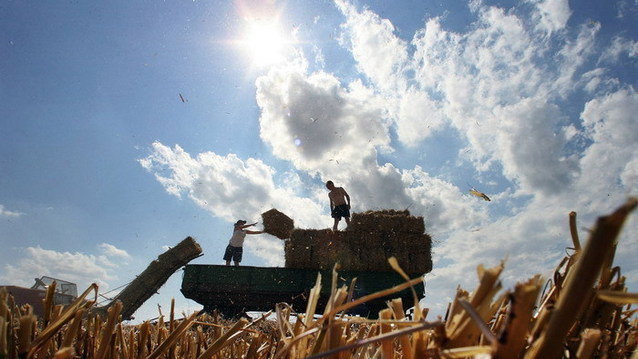
So, with exposure of 12,000 ha on wheat, i.e. half the land he works, the businessman is set to amass in silos a total production of 60,000 tons of wheat, considering a productivity of 5 tons/ha.
The difference against the average productivity in money terms amounts to EUR5 million, according to ZF calculations based on current average prices.
“The Oltenia region [where the company operates] has been the one most affected by drought in the last two years and lately rainfall has amounted to just 250 l per sqm. The water shortage is significant, at least 400-500 l per sqm,” explains Mihai Anghel.
This summer’s wheat production for the overall economy was estimated at 5.7 million tons at the end of last week in a European Commission report. This is down 3% against the April forecast. However, the average wheat production of local farmers is set to be 2.9 tons/ha, 14% higher than in 2011, when only 5 million tons of wheat were gathered in barns.
Amid a weaker harvest and tensions on international commodities exchanges, the price of wheat last year grew by 40% in a few weeks to 1,100-1,200 lei/ton (EUR250-EUR260/ton), a level kept until this spring, when the price started on a slightly downward path. Anghel expects the price of wheat to decline to close to RON700/ton (EUR160-EUR170/ton) this year with the new harvest.
“Anyway even these are prices we didn’t even dream about ten years ago,” Anghel says.
(English version by Daniela Stoican)