
The price of pork and of poultry in Bucharest was similar in early August to last year. The price of beef on the other hand was down 8%. Farmers say this is because large numbers of cattle were slaughtered as a result of higher food costs.
Livestock farmers unanimously say they have cut their profits to a minimum because shelf price increases are directly dependent on the purchasing power.
“Feed makes up 70% of the end price of pork. Now the entire grain market is stuck because of the low harvest. Those whose wheat production was acceptable are holding on to their production in the hope of getting higher prices. There’s really nowhere to buy from,” explains Martin Dorin, manager of Degaro farm in Fantanele, Constanta county, which has 2,600 sows.
The 70% increase in the price of feed is not surprising, considering that currently prices for corn, wheat and barley feed are 20-30% higher than in the similar period of last year, according to data of the Agriculture Ministry (MADR).
He says the increase in grain prices is reflected in the price of feed. “Whereas last year we would buy the fodder at an average price of 0.7 lei/kilo, now we pay RON1.2/kilo,” Dorin says.
Minimal price increases for pork
The manager of Degaro, a company owned by a group of Danish investors through Premium Porc, says an increase in pork prices is directly dependent on the future evolution of costs.
“Other major costs, such as the price of gasoline, have also increased. We only sell live animals and so far we have not made significant price increases, only by RON0.1% per kilo in order to be able to cover our costs. The situation is not rosy, but there have been drought years before,” Dorin adds.
The pork industry has been heavily hit in the last eight years, with exports being banned until the beginning of this year because of swine fever fears. During the years of the ban Romania lost 3 million pigs. Now there are around 4 million pigs left, about half of which are owned by subsistence farmers. Each year on the local market around 550,000-600,000 tons of pigs are slaughtered. In early August in Bucharest markets the price of a kilo of pork was between RON10 and RON12, a similar level to 2011.
The situation is more complicated for cattle farmers because their business is directly influenced by the evolution of the price of milk and by beef prices.
Because milk processors offer low prices, farmers have in the past few months turned to slaughterhouses in order to cut costs. But meat prices cannot go up while the number of cattle slaughtered is on the rise, says Costel Caras, a farmer from Ilfov county, who has 130 cows.
“I have been trying to take 30 cows to the slaughterhouse for several weeks because otherwise I won’t make it through the winter, but there’s been no answer.”
Slaughterhouses are not able to meet demand from farmers. Last year I would get RON6/kilo of live cattle, but now the price is around RON3.5-4/kilo,” the farmer says.
The tendency of farmers to cut their livestock numbers in farms is also seen in statistics. Data of the National Statistics Institute for April, the latest ones available, shows that the number of cattle slaughtered went up by 66% against March.
Costel Caras also says the evolution is largely due to the low price offered by processors for milk and amid higher feed prices because of the drought.
“Processors offer RON1 per liter of milk, but our costs are now of RON1.3 per liter. Out of the total of RON1.3 around 70% is accounted for by animal feed.”
The farmer says in turn that feed prices follow the same trend as the main agricultural raw materials produced locally, i.e. wheat, corn and barley.
Poultry processors announce 5% price rises
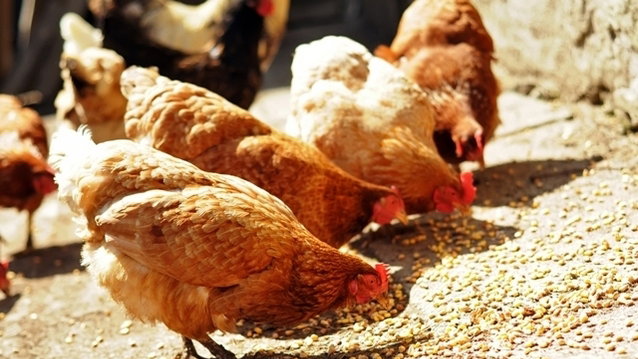
Processors with businesses in the poultry industry have already announced shelf price increases of around 5% as a result of the feed price increase. But this is not enough considering that feed prices in the industry went up by 20% in the past three months, with feed ending up being around 70% more expensive than a year ago.
As in the case of pork and beef, feed covers around 60-70% of shelf prices. A simple calculation shows that the price of poultry should have increased by around 12% in the last three months, but producers say the weak purchasing power has not allowed such price increases.
(English version by Daniela Stoican)