
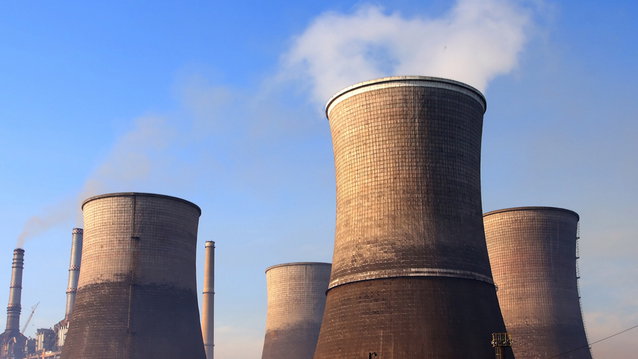

Even so, the Romanian government is preparing to sell the three companies that supplied more than 30% of the power in Romania.
The severe drought last year caused a 26% decline in the amount of power delivered by Hidroelectrica, Romania’s largest electricity producer, and therefore the shortage on the market was largely offset by the electricity generated by plants running on coal.
For instance, Complexul Energetic Craiova, which uses lignite to generate power, reached 1.2 billion (EUR268 million) in revenue last year, up 11.8% on 2011. At the same time, profit rose to RON0.7 million, 3.2 times higher than in 2010.
The thermoelectric power plants had to cope with such a high demand in 2011 that they did not even have time to go through with their investment programs that would have required taking some of their generators offline, as shown in the 2011 report of Complexul Energetic Craiova, a document published by the company’s minority shareholder, Fondul Proprietatea.
Other plants, such as CEN Rovinari saw rising costs caused by the increase in coal production enabling them to generate the high amount of power needed.
“The electricity production was higher than scheduled because of the extended drought, which made it impossible for hydropower plants to generate electricity and led to the necessity to boost the amount of electricity generated by thermoelectric power plants and therefore to an increase in the amount of coal mined. This also caused to an increase in operating expenses beyond the level scheduled,” CEN Rovinari’s 2011 report reads.
The plant delivered 5.6 TWh of electricity to the national grid last year, 4% more than budgeted. Therefore revenue reached RON1.07 billion, up about 34% on 2010. Despite the higher costs, the profit surged to RON33.3 million, 56 times higher than the 2010 profit. The company had 4,375 employees at the end of 2011.
The thermoelectric power plants have restructuring steps scheduled for this year, some of which justified by the increase in the costs of buying the emissions certificates for the electricity production, which will no longer be free of charge as of next year.
“The restructuring program entails laying off 200 employees in 2011 and 100 in 2012. As the government decision approving the 200 layoffs for 2011 was made on December 6, the implementation of the measures started in 2012 by laying off 121 employees on February 15, 2012,” reads last year’s report of CEN Turceni, the largest thermoelectric power plant in Romania.
The company posted RON1.5 billion lei in revenue last year, up 46% on 2010. It offset the losses of 2010, which stood at RON69.3 million and posted net profit of RON55.5 million in 2011.
The three energy complexes merged with mining company Societatea Nationala a Lignitului Oltenia (SNLO) forming Complexul Energetic Oltenia. The new entity will be privatized as agreed upon with the International Monetary Fund. (EUR1=RON 4.4648)
(English version by Loredana Fratila-Cristescu)