


“In the coming months, we will open another 14 pharmacies. In the first quarter, three pharmacies were closed in Bucharest, and outside Bucharest two pharmacies were relocated,” said Ovidiu Wencz, general manager of S.I.E.P.C.O.F.A.R.
Dona is one of the largest pharmacy networks in Romania, operating a chain of over 230 units. The company is owned by Romanian entrepreneurs and is undergoing rebranding, the largest process of this type carried out on the pharmaceutical retail segment.
According to National Statistics Office data, Romania has around 7,000 pharmacies, and their number is set by law depending on the number of inhabitants. Thus, in Bucharest there’s one pharmacy per 3,000 inhabitants at most, county cities have one pharmacy per 3,500 inhabitants and other cities one pharmacy per 4,000 inhabitants. In the rural area there are no caps.
In this context, network expansion can only be operated through license acquisition or by purchasing small chains.
The company is carrying out a project through which it is implementing a new image for the pharmacies set up in 1993. “The implementation of the new visual identity concept will take 4-5 years and will cost around EUR11-13.5 million overall,” specified Ovidiu Wencz. The process will be unfolded at a pace of 50-60 pharmacies per year, slower during summer months.
Dona embarked upon this process during a tough period for the market, after payment deadlines were cut. After the state reduced its payment deadlines, pharmacies had to take the same step with wholesalers, but problems arose along the chain as certain units were unable to meet their obligations.
The stakeholder in S.I.E.P.C.O.F.A.R. is Calihory Company, with 99% in stock, according to Trade Registry data. In its turn, Calihory has as stakeholders businessmen Eugen Banciu (97%) and Nicusor Nistor (3%), according to the same source. Eugen Banciu is one of the most powerful domestic entrepreneurs in the drug industry, being the one who set up and then sold (in several stages) Farmexpert wholesaler.
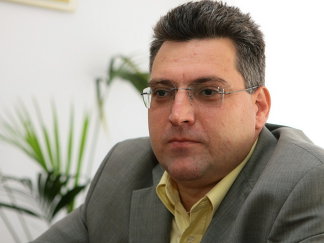 Ovidiu Wencz was appointed at the helm of Farmaciile Dona in late 2011 after having run, for almost nine months, the Romanian subsidiary of Spain’s giant Campofrio.
In an interview with ZF, Wencz spoke about the high number of pharmacies in Bucharest and Romania. Wencz explained that an exception to the rule of pharmacy expansion made their number climb to 960 units in Bucharest, 44% more than there should have been. At the level of the entire country, the number of pharmacies set up through exceptions reached 1,000.
During the 2005-2010 period, there was an exception from the demographic criterion allowing for the opening of pharmacies in shopping centers. At that time, a pharmacy opened through this exception in a shopping center could not be moved to a street-front location, but afterward pharmacies were allowed to move.
Sales of medicines through pharmacies amount to EUR2.3 billion annually, but beside drugs pharmacies also sell various medical devices, cosmetics or other consumables.
(English version by Catalina Apostoiu)