
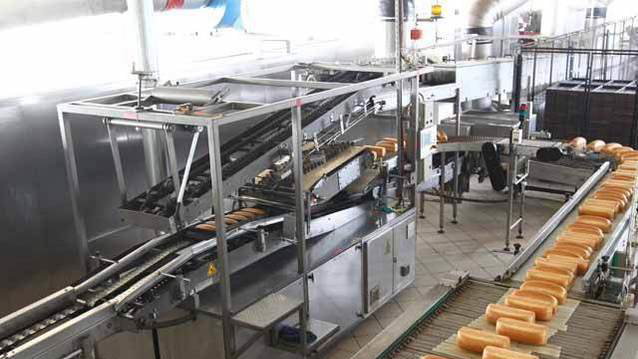
Dobrogea owes about 80% of the amount to banks while the remaining EUR3.5 million have to be paid to traders. In all, the debt of the Constanta (southern Romania) based bakery business stands at EUR29 million, according to the insolvency bulletin.
“The specific causes (for the insolvency i.e.) are the expiry of the validity of the rescheduling of the state budget obligations and the demands for payment of 4.7 million lei (EUR1.07 million),” reads the court-appointed trustee’s report published in the Bulletin of Insolvency Proceedings.
Dobrogea Grup is one of the latest bakery businesses to have joined the “club” of companies with financial woes. The difficult market has made shareholders of Pambac (Bacau) sell the company, those of Pan Group (Craiova) to close some of the production lines and Gheorghe Ilie, owner of Spicul to choose the insolvency way out.
Dobrogea Grup explains it went insolvent because tax evasion in its sector is estimated at 70%, retailers are putting pressure for lower prices, consumption dropped and wheat price went up.
Under the circumstances, the company posted EUR41 million revenue at the end of last year, down 24% on 2011 and its receivables rose by 25% to EUR18.1 million.
The decline in consumption and sales caused problems for Dobrogea, the cost to revenue ratio went down and the production capacity built before the crisis became oversized.
The first step Dobrogea Grup took to improve its situation was to drop the stakes it had in other businesses.
Dobrogea has a 52-year history, as it was established during the communist rule, in 1961. When it started it had two wheat mills, a bread factory and a biscuit factory. By the end of the communist rule in 1989 four more Dobrogea bread factories had been built in Constanta, Eforie Nord, Navodari, Harsova and Medgidia (SE Romania), as well as a sweets plant, a corn mill and a pasta plant. It was then privatized to employees and management.
(English version by Loredana Fratila-Cristescu)