
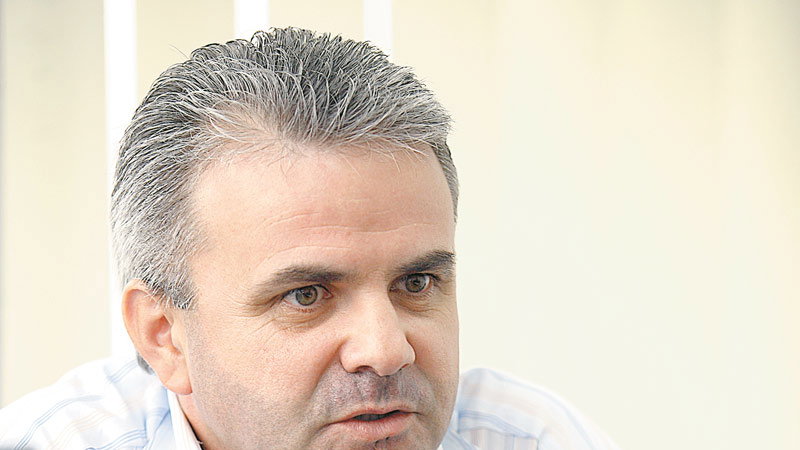
Simion was part of the management team of dairy producer Albalact Alba-Iulia for five years, two years of which as general manager and has been running Teraplast Bistrita, one of the largest construction supplies producers in the country, since the beginning of this year.
“In FMCG we would address end-users directly, we could make projections about end-users’ behavior. This is not possible in my current line of business. We can do our job very well as producers, but if the next link in the chain does not meet certain standards, the end customer gets a poor job and the negative effects will affect us as producers,” Traian Simion said.
The executive has also worked for the local subsidiaries of brewers SAB Miller, Ursus Breweries and for Brewery Holding, which Heineken bought in 2000.
Traian Simion was given the difficult mission of turning Teraplast Bistrita around after two years in the red and improving efficiency of its business that had been badly hurt by the financial crisis.
The company stepped into the black in the first half of 2013, posting 570,000 lei net profit (EUR128,000) compared with RON3.6 million loss in the year-ago period. Revenue went up 5.9% to RON104.4 million.
Simion says the people he chooses to work with in reorganizing the business need to have a background in the industry, a positive attitude, be willing to learn and capable of dealing with change.
“I’ve always believed people can be trained. In a company as in any other type of organization, most problems occur when you change attitudes and mentalities. People are reluctant to change and it is extremely hard to get them involved and make them responsible,” Simion said.
“The process is ongoing through changes of working procedures, through training sessions, individual discussions, operational meetings and other [means].”
The strategy he used to steer Teraplast back towards profit, Simion says, was to sell profitably and efficiently, since the construction market is not showing any signs of a rebound, which it will do soon.
“Investments in 2013 focused on maintaining the existing facilities and equipment.”
Teraplast group invested more than EUR36 million in relocating all its production and administrative facilities from Bistrita to the Teraplast Industrial Park developed outside the city in 2007-2012.
It paid for some of the investment using the EUR15 million it raised from an initial public offering conducted in 2008.
The money it raised back then helped it become stronger and more capable with dealing with the crisis. Even so, it did not escape unscathed.
Sales increased almost every year during the crisis, but profit margins significantly shrank so the PVC profile manufacturer ended 2011 and 2012 with RON17.5 million and RON9 million losses.
Teraplast sales rose by 14.4% last year to almost RON240 million.
“The main source of losses was the need for significant provision for doubtful debt. The solution we chose to address the problem was to change sales policies and develop a credit department that analyzes the creditworthiness of customers and decided how much credit Teraplast can extend to each of them,” Traian Simion says.
A significant contribution to the increase in Teraplast’s sales this year came from the installations business. The company expects growth again mainly from export volumes. (EUR1=RON4.4545)
(English version by Loredana Fratila-Cristescu)