
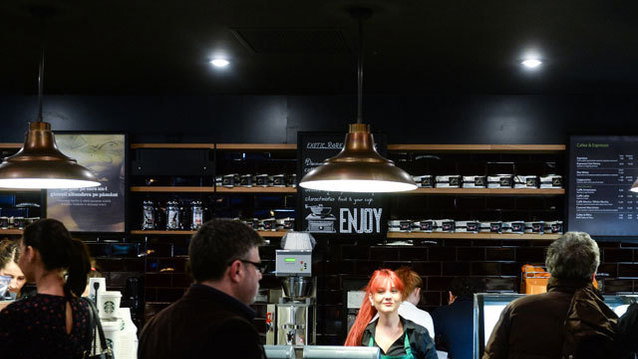
More than 1,000 companies operating coffee shops and bars, both local and international brands, had to close due to high rents and prices to match during 2008-2013. Over the last couple of years, however, interest in this industry is back so both local entrepreneurs and international brands are willing to spend more than EUR100,000 on a specialized place that sells coffee-based products.
The latest names interested in the Romanian market are Esquires Coffee, a Canadian brand with an over two-decade history and Caffe Ritazza, an Italian chain operating in more than 20 countries. Both networks will arrive via franchisees, like all the international chains, from Starbucks to Columbus Coffee, do. The latter is one of the latest names to enter the local coffee shop market, having opened a coffee shop in Baneasa Shopping City.
“A lot of investors come to us looking for a coffee shop franchise. The coffee shop market has diversified quite a lot in the last couple of years so the real opportunity on the market is for those who want to develop at least ten-coffee shop networks,” says Raluca Stanciu, managing partner with consultancy firm Inventure Franchise Consulting. The company helped bring the Columbus Coffee brand in Romania and has several other projects in progress in this field.
“When a potential partner chooses an international brand to bring it to Romania, they have to look at networks with an integrated concept, that is as diverse products and services as possible, because the consumers are more educated now,” she added.
Not only local entrepreneurs want to introduce foreign brands in Romania, international companies, do, too.
A recent example in this regard is Starbucks, the largest local coffee shop operator. The brand changed three franchisees during the crisis, with the latest shareholder change happening this year precisely. Poland’s AmRest, which owns more than 800 restaurants in several countries in Europe and in China entered the local market by buying the Starbucks franchise from a Bulgarian businessman.
The Bulgarian Starbucks franchise was part of the same deal. The Polish company therefore took over 14 coffee shops in Romania and 5 in Bulgaria, paying about EUR16 million. The brands its restaurants operate under include KFC, Pizza Hut, Burger King and Starbucks.
Starbucks resumed expansion in Romania last year and the new shareholder plans to triple the number of coffee shops over the next few years, a clear sign of the rebound of the market.
Another such sign is that the Kenvelo group, which operates fashion stores under several brands such as Kenvelo, Timeout and Lee Cooper, has diversified its portfolio, opening Brioche Doree coffee shops in Romania. The new segment is one of the group’s priorities this year, which has six openings planned in street front areas like Dorobanti in central Bucharest or in malls.
There are also some local entrepreneurs that built businesses in this industry, some of them integrating the coffee shops in groups that focus on restaurants, while others bet on independent coffee shops. Dragos Petrescu has several restaurant brands in his City Grill group, as well the City Café coffee shop chain. In turn, Catalin Mahu, the owner of the La Mama restaurants, also owns the Cafepedia coffee shops. The two are among the largest local entrepreneurs in the restaurant and coffee shop industry.
There are also some coffee shops that sell coffee specialties, which have employees trained locally or abroad. They include Origo, Steam Coffee Shop, Guido and M60. They mainly sell coffee and rely on the specialized training of their employees. They get their coffee from various parts of the world, such as Colombia and Kenya.
Still, there are only 65 specialist coffee shops in Romania, according to Euromonitor data, 15 more than in 2008, which shows consumers are now more educated about coffee.
Coffee shops in Romania also include those places that serve a variety of other beverages along with pastry and confectionery products or sandwiches besides coffee. There is no specialized NACE for such places, as they are all included in the category of “Bars and other beverage service activities.”
This is an industry with 12,700 companies, of which only 9,350 were active at the end of 2013, according to Trade Registry data. The number of active companies is 1,000 lower than in 2008, which means the consumer spending decline and crisis took their toll. Still, the number of companies is expected to increase.
(English version by Loredana Fratila-Cristescu)