
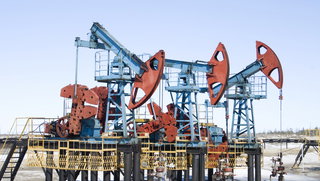
Despite thousands of people taking to the streets to protest against shale gas drilling and countries like Bulgaria and France banning the exploitation of these resources because of the potential impact on the environment, the Romanian authorities signed the agreement with Chevron, with the latter having to pay the same royalties on a prospective production of shale gas as does any other local oil company.
On the other hand, in response to those challenging the methods used for shale gas drilling, Chevron says in none of the cases cited by them could a direct link be established between the method known as hydraulic fracturing and pollution of water reserves, for instance.
Moreover, Chevron says banning shale gas drilling actually means having a better alternative, which is not the case for Romania.
Romania’s gas imports from Russia account for 30% of the country’s domestic consumption, with Romania paying $10 billion to Gazprom intermediaries in the past eight years alone.
Data from the mineral resources authority show that, unless new discoveries are made, Romania’s reliable gas reserves will run out within 10 years, while power consumption is expected to rise. Under the circumstances, shale gas and the deep-sea resources of the Black Sea seem to be the only ways for Romania to stabilize its natural gas production, but at what cost?
What hydraulic fracturing and shale gas mean
Shale gas is gas trapped within shale formations, so it is harder to exploit than conventional gas. This means that in order to release the shale gas, instead of the traditional vertical drilling, several methods are used, which entail horizontal drilling and hydraulic fracturing.
Chevron is now entitled to extract shale gas, if it finds it, through hydraulic fracturing, from an area of 300,000 ha on the sea coast. This is almost 2,000 times larger than the Baneasa platform, where the largest commercial project in Romania has been developed so far.
Each well drilled using this method injects into the ground, as much as 4 km-deep, a solution that could fill an Olympic swimming-pool, a mixture of water, sand and several chemical compounds able to pierce through the earth strata and release the gas. Then, this “solution” is released and deposited in an area the size of two football pitches, and is subsequently treated. Chevron says none of this will have a negative impact on the environment and that people will be able to continue to use the land, even for agriculture.
“Depending on the results obtained during this exploration period, we will see whether to ask for things to move on to the development stage, which would take another 25 years,” Holst says.
The three blocks, Costinesti, Adamclisi and Vama Veche, were won by Chevron in the summer of 2010, following a major round of auctions organized by the mineral resources authority.
Holst says in a first stage, the company will do seismic works on the three blocks, which will basically amount to an x-ray of the underground strata with a view to identifying potential gas reserves. This is set to take around six months.
Then will follow exploration drilling, with at least 8 wells to be drilled.
“At first, wells will be drilled using conventional technologies, i.e. through vertical drilling,” Holst explains.
If the information collected through this method is encouraging, things will move on to the next stage – which Bulgaria banned – horizontal drilling and hydraulic fracturing.
Earthquakes and fire coming out of the tap
The international press has on several occasions reported on the problems facing residents of areas where shale gas has been exploited.
Among these are the fact that instead of water coming out of taps, gas came out, in other areas there were earthquakes, while in yet others the residents’ health was affected.
Holst says, though, that in the US, the country where now a quarter of gas produced is shale gas, none of those occurrences could be linked to the method of exploiting the gas reserves.
“We believe shale gas is safe,” said the Chevron representative.
Shale gas and clean energy
Holst explains that in the oil agreements signed for the three blocks in Dobrogea (Costinesti, Adamclisi and Vama Veche), there are no provisions allowing the authorities to cancel these agreements if they believe at some point that the technology used can harm the environment, but that in order for the company to function, it needs an extensive process of approvals, which involves institutions such as the Environment Ministry and the National Agency for Environmental Protection. Without the approvals of these two institutions, the company cannot proceed.
“Shale gas is a clean source of energy, it can contribute to energy security, it creates jobs and generates investments,” the Chevron representative also says.
According to Holst, each well generates 60 jobs, and the economic benefits would amount to $4 million in paid wages, service contracts, taxes and royalties.
(English version by Daniela Stoican)