
CEZ’s reassurance comes at a time when Italy’s Enel, the largest private electricity distributor in Romania, decided to put its business up for sale.
“Our strategy is not to withdraw from the market now.”
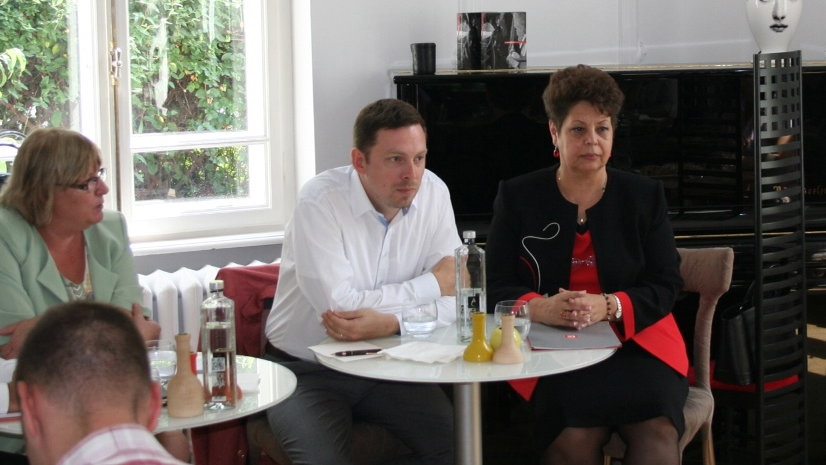
For CEZ it is very important to stay in Romania because it believes the market has growth potential, Zmelik added. He became head of the Romanian operations of CEZ on July 1, replacing Jan Veskrna, the man who had run the local operations of the Czech-held company since 2005. CEZ entered Romania that year by acquiring Electrica Oltenia.
Even though he says the utility group will keep its local position, any significant investments besides those needed to keep the power distribution network going are not considered.
CEZ has positioned itself as one of the most aggressive investors on the local market, allocating EUR1.1 billion for the building of the Fantanele-Cogealac project, the largest onshore wind farm in Europe.
“We’ve halted major developments on the market.”
Major acquisitions are not a goal now, the company wants to stabilize current operations and not bet on expansion, CEZ Romania CEO answered when asked about whether CEZ might be interested in buying what Enel had for sale.
Enel is selling all its electricity distribution and supply operations in Romania by selling the stakes it holds in the former Electrica Muntenia Sud, Electrica Banat and Dobrogea.
Although CEZ, too, announced early this year that if it found a buyer it would sell the Fantanele-Cogealac wind farm, Zmelik is now saying that the farm is off the table, as the company decided to stop looking for an investor to buy it. CEZ believes some tweaking of the green power support scheme is possible and is in talks with the local authorities, he added.
CEZ supplies power to the Oltenia region in southern Romania, where it has about 1.4 million consumers in seven counties. One of the biggest problems the company has to deal with is the electricity theft, with losses accounting for 12% of the power going through its power lines every year.
“In Dolj for instance, about 30% of the power going in does not show in power bills. About 7% to 10% is the loss comes from the distribution process but the rest is a commercial loss, illegal electricity consumption,” explains Doina Vornicu, the current chief operating officer of CEZ Romania, former head of CEZ Distributie.
“In Gorj, for instance, the losses stand at 6%. Craiova is one of our hot spots.”
Vornicu added that part of the theft shows in the bills paid by the other customers, while the company itself pays for some of the rest.
“We conduct inspections periodically,” Vornicu added.
CEZ Romania says that out of the 9 TWh passing through the region last year, 6.5 TWh actually reached an end consumer, while losses accounted for 1.15 TWh. According to the OPCOM energy exchange data, the average spot electricity price no taxes included stood at EUR35.3 per MWh last year. Electricity thefts from CEZ Romania’s network were worth EUR40.5 million.
The company officials said power consumption continued to decline this year, but the small consumers and the household consumers are showing signs of a rebound.
“Unlike other parts of Romania, Oltenia started to visibly decline in the last five years. Oltchim, Arpechim, the large consumers, closed. The small consumers emerge and they are slowly growing. We’re also seeing an increase in household consumption, especially in rural areas,” Vornicu said.
CEZ operates via eight companies in Romania: CEZ Romania, CEZ Distributie, CEZ Vanzare, CEZ Trade, TMK Hydroenergy Power, Tomis Team, Ovidiu Development and MW Invest Team. Taken together these companies posted EUR814 million revenue in 2013, while net profit stood at EUR50 million. CEZ group reports show it had 1,813 employees in Romania at the end of last year.
(English version by Loredana Fratila-Cristescu)