
Bank customers no longer able to repay their loans because they lost their jobs or their income shrank can discuss various loan-restructuring options with bankers.
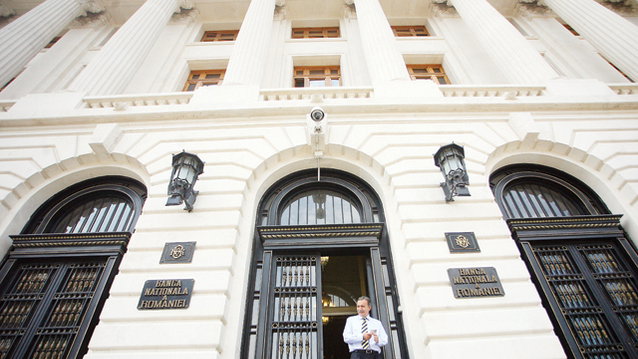
Central bank’s supervisory department head Nicolae Cinteza said at the end of last year that some banks had gotten to the point of ‘killing their customers’ with their way of restructuring overdue loans until then, adding the central bank would recommend restructuring loans for the customers that can still manage to pay at least part of their installments despite their problems.
The central bank looked at the past due household loans of more than 20,000 lei (EUR4,400) in the banks’ portfolios in 2011 and in the first half of 2012 and found no significant improvement of restructured non-performing loans compared with the unrestructured ones.
However, loans past due by up to 90 days that were restructured showed a greater improvement than those unrestructured.
One of the most frequently used solutions to restructure individuals’ loans was loan rescheduling but the step most likely did not yield satisfactory results, generally leading to a postponement of the risk occurrence instead of completely eliminating it, the central bank says in its Financial Stability Report.
Commercial banks continued to restructure mainly foreign currency loans (more than 70% of the total) and loans rated as loss amount to about 45% of the total, according to the central bank.
BNR experts found that restructuring is used more often for the corporate loan portfolio than for the retail portfolio (10.8% of the loans granted to companies compared with 8.8% of the loans granted to households).
Mid-year statistics of the central bank show rescheduling steps were taken for 8.7% of the mortgage-backed loans granted to household and more than 15% of those granted to non-financial companies.
The loans past due by up to 30 days are the most often rescheduled (67% of the total household loans and 60.3% of the corporate loans).
The other restructuring step, the refinancing of the mortgage backed loans was rarely used in the first half (4.8% of the household loans and 2.8% of corporate loans).
(English version by Loredana Fratila-Cristescu)