
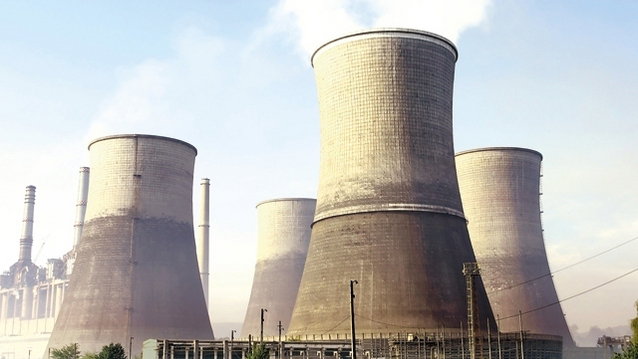
Other than the competition of the two natural gas producers turned electricity producers, as well, CE Oltenia also has to compete with about 900 wind turbines.
“The idea that lignite-based production receives support [from the government] in Romania is false. The gas we use (for the gas turbine of the plant i.e.) is paid as a ‘bundle’ with imported gas and is three times more expensive than what OMV Petrom and Romgaz use, which are allowed to use only Romanian gas,” the company officials said.
Were it not for Government Decision 870/2012, the power Petrom and Romgaz generate would be more expensive than CE Oltenia’s electricity, they added.
On September 4 of last year, shortly after Petrom, the largest company in Romania, inaugurated a 860 MW gas-fired power plant after a EUR530 million investment, the Official Gazette published the government decision allowing the country’s gas producers to use only Romanian gas to generate electricity, which is three times cheaper than imported gas.
Romania imports about 20% of the gas it needs from Russia, according to the data for the first five months of this year published by the energy market watchdog ANRE.
According to the data published by Petrom, imported gas cost 2.5 or 3 times more than Romanian gas on average in the first half. Romania is going through a gas price deregulation process.
Considering the structure of the gas mix and the prices for the first half of the year, Petrom and Romgaz pay 51.6 lei (EUR11.5) per MWh of gas used while CE Oltenia pays almost RON68 per MWh, which is over 30% more.
“The cost of lignite-generated electricity is lower than in any other plants in Romania, too, except for the energy generated by Nuclearelectrica and Hidroelectrica,” CE Oltenia officials said.
If Petrom and Romgaz were not allowed to use only domestically drilled gas, their electricity would be more expensive than CE Oltenia’s, they added.
Another problem for CE Oltenia is green power, as the national grid is set to prioritize the clean energy generated by wind farms (2,200 MW capacity) and photovoltaic parks (almost 400 MW capacity) over power generated by thermoelectric power plants. This causes market share decline and significant costs for coal-fired plants because of inefficient running due to the frequent starts and stops ordered by the grid system operator to balance the load, CE Oltenia’s officials say.
(English version by Loredana Fratila-Cristescu)