
The EU money was supposed to defray half of total costs.
The shareholders of Romanian state-run natural gas producer Romgaz, which develops the project alongside the thermal power plant and gas transporter Transgaz, will convene an extraordinary meeting to discuss a proposition to cancel a decision adopted in 2012, which set up Getica CCS Project Company SA.
The company was to develop the carbon capture and storage (CCS) investment valued at EUR1 billion.
Other participants in the project include the Institute for Study and Research in the Energy Sector, or ISPE, companies GeoEcoMar, Alstom and Schlumberger, the Economy Ministry and the Government.
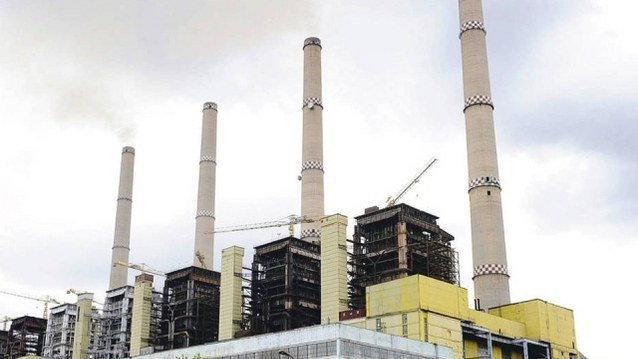
The project was aimed to capture the carbon dioxide from the Turceni thermal power plant, transport it with the help of Transgaz and safely store it underground. Romania pledged to reduce CO2 emissions and the European Union backs the development of technologies aimed to reduce pollution.
“In the meantime, there have been some changes regarding the founders of the project company,” Romgaz general manager Virgil Metea said. Energy producer Complexul Energetic Turceni merged last year with Complexul Energetic Rovinari and coal company Societatea Nationala a Lignitului Oltenia into Complexul Energetic Oltenia.
“A new project company will have to be set up if the investment continues,” Metea explained.
According to Metea, shareholders will also discuss financing aspects. According to available data, the investment is worth EUR1 billion, with half to be secured by the European Union. The founders of Getica CCS wanted to get funds through NER300, an EU funding program for innovative low-carbon energy demonstration projects. The project was approved in a first selection round but was later disqualified as Romanian authorities failed to reconfirm their contribution to the project.
“We can’t see how the project could be unblocked considering there is no other program financing CCS projects,” ISPE representative Carmencita Constantin said.
According to Constantin, ISPE will try to obtain financing for a new pilot project through a European research program called Horizon 2020. Project selection will start next year.