
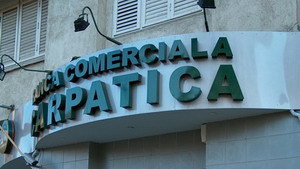
Banca Comerciala Carpatica is the only listed business owned by the Carabulea, who controls no less than 36 companies operating in transport, real estate, travel industries, and manages another 18.
Ilie Carabulea owns 41.29% directly in the bank, which rendered Carpatica stock vulnerable to the investor sentiment and response when it became official that the main shareholder would spend the next 18 months in prison. Carabulea stepped down from his position as head of the bank on April 26, replaced by Nicolae Petria.
Banca Carpatica’s shares saw similar declines as those of BRD (BRD.RO) and Banca Transilvania (TLV.RO) since then. This shows that the investors did not panic about the bank being affected by the sentencing of its main shareholder to prison. Since April 26 through June 8, Carpatica’s shares fell 23.4%, compared with 20% decline for BRD and 22% for Banca Transilvania.
On Monday’s trading session, Banca Carpatica shares started with a 9% increase only to slow down to 5%. Banca Transilvania’s rose by 1.3% while BRD’s by 0.7%. The increase on Tuesday was of only 1.35%, while Banca Transilvania dropped 1.01% and BRD stagnated. Carpatica’s capitalization stands at more than 141 million lei (EUR32 million).
“It’s difficult to say what the impact of the sentencing on the shares was because the last few weeks overlapped with an overall downward trend and a deterioration of the investors’ perception of the banking stocks because of the international problems,” said Mihai Alexa, an analyst with Broker Cluj.
The response of stock market investors to the announcement on April 26 was delayed because the Carpatica shares were suspended from trading until May 4. The first day of trading after the announcement about Carabulea’s conviction of bribery, was May 4, when the shares fell by 6.23%. Slight increases and decreases followed until June 1, when they dropped 14%.
Not even the ruling by the Alba Iulia (central Romania) Court of Appeals, which denied Carabulea’s petition for a three-month stay of his sentence to give him time to make arrangements for his companies had an impact on the trend of Carpatica shares.
“Over the coming period, international developments and investors’ risk perception will influence the trend of Carpatica shares and of the entire banking sector rather than the news about its main shareholder,” the analyst said.
Whether listed on the Bucharest Stock Exchange or on the markets in the region, banks have been among the vulnerable entities to the international developments. Investors’ worst fear is that banks in Europe will be unable to offset the losses caused by Greece not paying its debts.
Banca Carpatica, like Banca Transilvania, is one of the few Romanian-held lenders. The Sibiu-based bank stepped into the black in the first quarter, posting 8.54 million lei (almost EUR2 million) in net profit by international accounting standards. It expects RON17 million profit this year after several years in the red.
(English version by Loredana Fratila-Cristescu)