
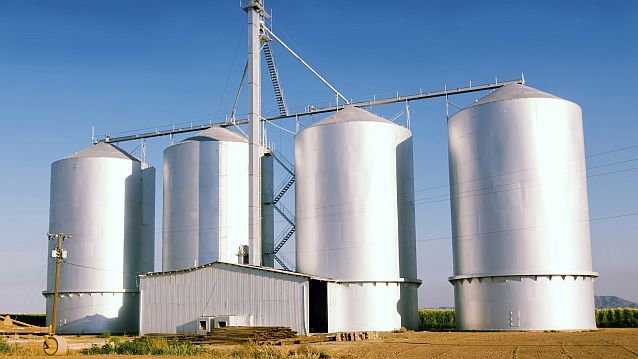
“The company has been preserving the silo and the storehouse for a number of years. Farmers around here take their grain somewhere else,” said the representatives of the Vadu Lat and Baneasa town halls where Cargill’s two facilities are located.
The status of the storage facilities owned by Cargill in Giurgiu is unclear considering there is no mention of the silo or the storehouse on the corporate website. The data officially released by the company shows that it does not own any such facility in Giurgiu and operate there only via local representatives. The data from the Ministry of Agriculture and Rural Development, however, certifies that Cargill does in fact own them. The trader officials did not comment in any way and did not provide any explanation, either.
The strategy of the trader is surprising considering its rivals have been expanding in full gear to this county and other parts of Romania. The traders’ interest in Romania rose as the grain and oilseed crops increased. The record harvest of last year generated almost EUR18 billion for the economy, according to previous estimates.
It has been more than a year since Cargill bought something in Romania. At the time it acquired a 44,000-ton silo in Drobeta-Turnu Severin (southwest of the country) from Westgrain, owned by the Micula brothers (who also own the soft drinks producer European Drinks).
The trader has not bought anything since then even though when it first arrived on this market it used acquisitions to gain ground. This is how Cargill got to own a network of silos strategically positioned along the Danube, where the largest farmers are.
While Cargill is keeping storage facilities unused, Alfred Toepfer has already completed a significant part of the gigantic expansion plan it announced in the second half of 2011. In the past twelve months, Toepfer has taken over a silo in Biled, Timisoara County (western Romania) and is now building facilities in Calarasi and Moldova Noua (south and southwest of the country) from the ground up.
The expansion plan did not leave Giurgiu out, either; Alfred Toepfer owns storage facilities of 66,000 tons there, after having added more space to the silo built in the 1930’s it operated in the city of Giurgiu.
Another proof to the interest of traders in this county is that Agricover, a top five player on this market, bought 24% in Danube Grain Services, a business controlled by Austria’s VA Intertrading, last year. The company owns a 12,000-ton export terminal by the Danube in Giurgiu County.
All major grain farmers operate in the counties by the Danube; this river is also the cheapest way of shipping wheat, corn and sunflower abroad. Exports of grain and oilseeds amounted to EUR1.6 billion last year.
(English version by Loredana Fratila-Cristescu)