
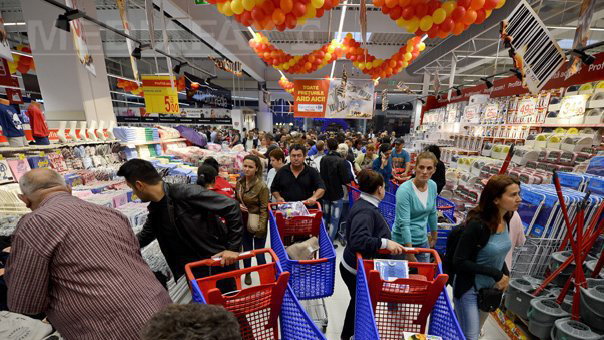
Three more large format stores are now under construction. Out of the 33 such stores, one third opened in the Sector 6 of the city, where the Militari, Crangasi and Drumul Taberei districts are. Sector 6 is also where the first hypermarket in Romania ever, a Carrefour, opened in 2001.
“Retailers rushed to open in Sector 6 because of the number of industrial sites available there and because the land was cheaper than in Sector 1, for instance. Moreover, there are three important bedroom districts, Militari, Drumul Taberei and Crangasi there, and the infrastructure and living standards are better than in Sector 5,” says Daniel Mocanu, general manager and shareholder of Daas, one of the leading suppliers of equipment for retail and hotel and restaurant industry.
On the other hand, Sector 1 (regarded as the home of above-average income Romanians) and 5 (one of the poorest of the city, with districts like Ferentari and Rahova) have only three such stores each. Kaufland is due to open a store in Ferentari, taking the number of hypermarkets in Sector 5 to four.
“The northwest area (Sector 1) is developing in every respect and will attract hypermarkets, as well. It is already a destination for residential projects and the infrastructure – the subway, is under development, so retail projects will come, too,” says Oana Iliescu, managing director of real estate consultant DTZ.
Ikea, for one, bought a plot of land there for a residential development.
“A single sector in Bucharest is as big as the entire city of Cluj by population, and incomes are higher, which justifies the expansion of retailers operating hypermarkets in the capital city. Before opening a store, they analyze things carefully,” she added.
(English version by Loredana Fratila-Cristescu)