
This is a clear sign that beyond the better than expected economic growth (more than 2% this year), the increase in exports and industrial production, lies a different reality, where average Romanians have not beat the crisis and cannot afford to spend much.
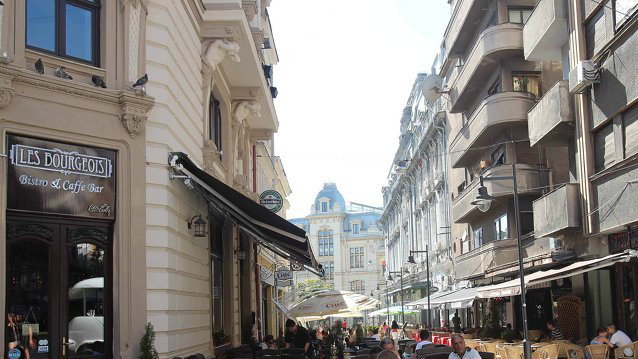
“Customers keep coming, but many of them linger over [a bottle of] water the entire evening,” says Nicu Martin, manager of Arcade Cafe, one of the best-known and oldest bars in the Old Town, an area of about 100 restaurants, bars and cafes, which generate EUR150 million to EUR200 million revenue a year.
Dragos Petrescu, one of the most important entrepreneurs on the local restaurant market and one of the first to sense the potential of the Old Town says “we can now say the Old Town slipped into a slight depression. After a long time of significant growth and investment, the area is reaching maturity (…)”.
He has several businesses in the area, such as City Grill, Hanu Berarilor, Trattoria Buongiorno and Caru’ cu Bere, the most famous restaurant in Romania, which he does not own but manages.
He believes the area will remain a good place to do business mainly for strong brands, which have gained consumer loyalty.
The situation in the Old Town proves statistical data about economic growth are not showing in the market, as consumer spending fell 3.3% in May compared with May 2012 and was flat in the first five months. Whereas consumer spending used to be the driver of the economy during the boom years, it is now dragging it down, considering wages in Romania are among the lowest in the EU and there are hardly any significant growth prospects.
Most Romanians earn less than 1,500 lei (EUR338) in gross amount per month, which means they cannot afford to go out and spend to put money back into the economy. Moreover, the Ponta Government, backed by 70% of the Parliament does not seem have a clear economic strategy to attract investment, raise wages and make consumer spending increase again.
Under the circumstances, Romanians are still afraid to spend, which is why they only buy what they absolutely need and save the rest.
Bucharest’s Old Town is a barometer of consumer spending as it has always targeted medium-wage earners, the largest class in the city.
People with above average incomes and less affected by the crisis, usually stay away from the city center where the Old Town is and to the Herastrau area (north of the city), which has seen significant development in the last few years attracting the customers who used to go out in another upscale area, Dorobanti.
(English version by Loredana Fratila-Cristescu)