
Modern office stock deliveries totaled nearly 66,000 sqm in the third quarter and chances are the capital city may top 300,000 sqm delivered by the end of the year, according to real estate consultancy company Colliers International.
Higher vacancy rates and quality and infrastructure discrepancies could lead to a stronger market fragmentation and a wider rent gap between top office buildings and offices located on the city outskirts on the medium term.
In the third quarter of the year, demand for modern office stock in Bucharest amounted to 74,800 sqm, to a total of up 263.000 sqm in January-September, 18% higher compared with January-September 2018. However, net demand dropped 20% in the first nine months, to 83,600 sqm, of which 35,000 sqm in the third quarter alone.
Over 100,000 sqm of lease transactions in the first nine months were competitive stock relocations and nearly two thirds of these transactions were pre-leases.
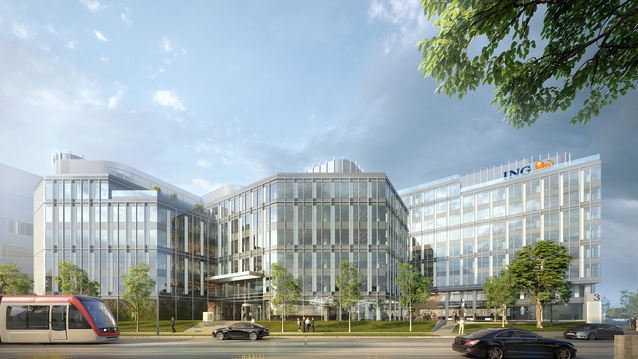
Around 66,000 sqm of modern offices were delivered in the third quarter in three large projects: Expo Business Park in the Expozitiei area (38,400 sqm), The Light in center-west (21,700 sqm) and Eminescu Office in central Bucharest (6,300 sqm), bringing deliveries in January-September to 250,000 sqm.
“Bucharest is gradually becoming a tenants’ market, which will become more apparent in 2020. This could lead to pressure on rents,” said Sebastian Dragomir, office advisory director at Colliers.
The IT&C sector was the star of transactions, generating approximately 58% of total office demand in the first nine months and over 50% of net demand, followed at a distance by financial services and professional services (11% each).
Nearly 20% of total demand was in the center-west area of Bucharest in the first nine months, followed by other sub-markets with 10-14% of total demand.
At the end of 2018, Bucharest exceeded 3 million sqm in modern office stock.
Developers are looking at new areas in Bucharest, such as Piata Muncii and investors are considering office buildings in regional cities.
“Demand from new companies on the Romanian market declined due to political and fiscal uncertainty. Many new entries have been postponed or have chosen other countries,” said Marius Scuta, head of office department at JLL Romania.bu