
The successful completion gives the green light to a new agreement, which is not necessary for financial purposes, but as a “guarantee” for investors that the needed structural reforms will be done and that restructuring and privatization of state-run companies will come true.
The International Monetary Fund glosses over the commitments that have not been met in the precautionary agreement and gives the green light to a new loan.
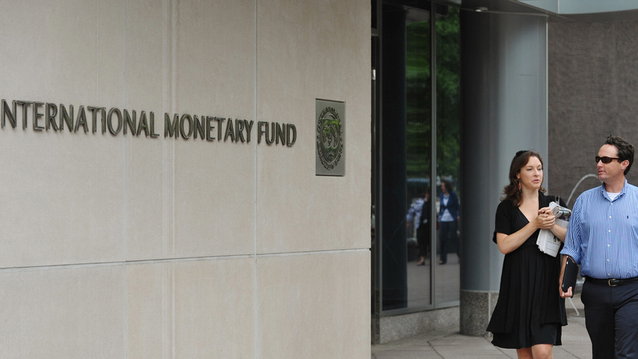
The IMF has once again proven tolerant to Romania and has decided the country has successfully completed its second consecutive stand-by agreement after being given a three-month extension due to the country missing certain targets.
Despite postponed privatizations, exceeding deadlines for the appointment of private managers in state-run companies, delayed structural reforms and slow economic recovery, the Executive Board of the IMF on Wednesday completed the last two reviews of the agreement with Romania and approved the latest letter of intent sent by the Romanian authorities.
In completing the reviews, the Executive Board approved three waivers for the nonobservance of the performance criteria on net foreign assets of the National Bank of Romania, the general government balance, and the central government arrears, based on corrective actions taken by the authorities, reads the IMF’s press release.
The IMF says the Romanian economy has stabilized, but is not happy with the slow GDP growth rate. The IMF implicitly admits that the agreement’s target of bringing the Romanian economy back to solid growth has been missed.
Last year the economy grew 0.7% and forecasts for 2013 target a 2% growth.
But for Romania economic growth should be 3-4% as the head of the IMF’s mission for Romania Erik de Vrijer said at the beginning of this year.
In addition to stimulating the economy, the current precautionary agreement with the IMF and the European Commission was supposed to also focus on deepening the country’s structural reforms, attracting strategic investors for state-run companies and reducing arrears.
The IMF now recommends once again to the authorities to make reforms in health, taxation, energy, transport and state-run companies in order for Romania to reach its economic growth potential and create jobs.
The Finance Ministry has informed that Romania has met all five targets provided for in the stand-by arrangement with the Fund.
The arrears of the state budget have been adjusted to less than 20 million lei, while the arrears of the local authorities have fallen below RON300 million.
But the arrears reported as repaid have mainly been paid with money borrowed by the local authorities from the state’s Treasury, which will have to be paid back.
Other targets met mentioned by the Finance Ministry are the designation of the winner of the auction for selling the majority stake in commodities railway carrier CFR Marfa, the sale of a 15% stake held by the state in gas transmission company Transgaz and the signing of a contract with a transaction consultant for an initial public offering for 15% in energy group Complexul Energetic Oltenia.
However, the privatization processes have been rushed and no major international investors have been attracted, with competition being almost non-existent. CFR Marfa ended up with only one bid and it remains to be seen how the price will be paid.
The IMF recommends to central bank BNR to take measures to solve the problem of non-performing loans and to improve crisis management mechanisms.
The Romanian Government has announced it plans to seal a new agreement with the IMF this summer.
Bank analysts say Romania should seal a new agreement with the IMF, but not for the financial resources it can get from it, but as a guarantee that it will implement the needed structural reforms and take the appropriate macroeconomic measures.
“Romania does not need such an agreement financially, but rather as a guarantee the much needed reforms in order to ensure long-term sustainable growth will continue,” says Catalina Molnar, chief economist of UniCredit Tiriac Bank.
Eugen Sinca, chief analyst of BCR, says the main purpose of a new agreement with the IMF is to give impetus to the restructuring of state-run companies, including through Stock Exchange privatizations, and to maintain stability on the financial markets.
(English version by Daniela Stoican)