
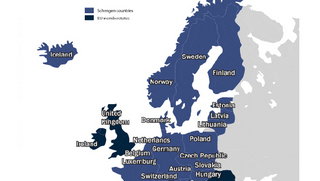
Antonescu pointed out there are countries that will use the recent political events as a pretext to oppose Romania’s joining the Schengen travel zone.
“The countries that have so far opposed Romania’s Schengen accession, and I have the feeling that not just the Netherlands has voiced its objection, might still use this pretext (issues involving the observance of the rule of law, e.n.) to postpone again a decision on the country’s entry into Schengen, but that has nothing to do with the political events in Romania,” Antonescu said.
The European Union has delayed until September a decision on letting Romania and Bulgaria into the bloc’s visa-free Schengen zone, due to Dutch opposition. In March this year, European Commission president Jose Manuel Barroso said the Commission will reject any attempt to link Romania’s accession to Schengen to the Cooperation and Verification Mechanism (CVM) and will push for a final decision in September at the latest.
Romania and Bulgaria have accused the Netherlands of double standards for imposing criteria for Schengen accession that are not part of the formal conditions for membership. The Dutch Government has been saying that Romania and Bulgaria have not done enough to rein in organized crime and corruption, and that opening the Schengen borders to their citizens is therefore premature.