
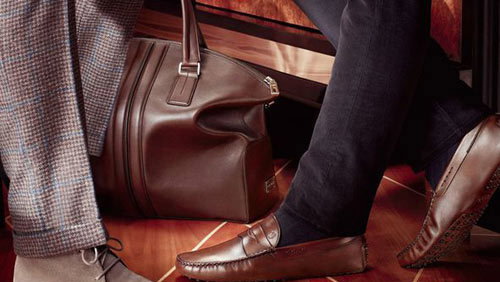

The producer, controlled by two Italian families with almost 100 years of experience in the field, arrived in Romania in 1995, lured by the cheap and skilled workforce and the fiscal incentives Romanian authorities granted to foreign companies. Today, 90% of production goes abroad.
“We produce leather footwear for women, men and children in Bihor for the medium and high segments. Of total production, around 90% is destined to direct exports to clients of Europe,” says Antonio Sargenti, Bihore manager.
He adds the company’s domestic clients include both large retailers such as Benvenuti, Otter, Bigotti, Humanic, Deichmann and Wortmann, as well as other domestic stores, less known at a national level.
“Overall, we’re present with our products in more than 100 stores in Romania”.
However, the largest part of production goes to France, Germany, Switzerland, Austria, Italy, Spain and the Baltic states. “As a rule, we manufacture under clients’ brands, but we also have our own brands such as Class Man, Off Road, Crenny, Marco Batisti for men’s footwear, and Ellen Blake, Coty Noir, Mode for women’s products. Children’s brands are Loly Laly, Baby Re”.
Overall, the two plant of Bihor manufacture 1.1 million pairs of shoes annually, with Bihore’s revenue revolving around EUR22 million, relatively flat in the past two years, according to Antonio Sargenti.
“We produced approximately the same number of shoes as in the previous year, but to stay on the market we had to cut net profit per sold pair. For 2014, we expect stagnation as orders now cover our production capacity for the entire autumn-winter 2014 season, giving us hope for the spring-summer 2015 season as well”.
In 2012, Bihore generated profit of around 820,000 lei.
The company started operating in Romania around 20 years ago, opening a 35-employee workshop in 1995. After 1997, when Romanian authorities decided to give foreign companies with Romanian legal personality the right to buy and own land and plants, Bihore shareholders started investing in own production units as the company had already come to over 350 employees working in rented spaces.
“Between 1998-2002 we invested around EUR10 million buying 150,000 square meters of land in Bihor county. We thus built two plants with a total area of almost 18,000 square meters for footwear production”.
In that period, the company had reached 1,100 employees and production of 1.4 million pairs, all manufactured in a lohn system. In 2005, the company shifted from lohn to own production.
Today, the number of employees dropped to around 750, but the company of Romania, namely Bihore Srl is the owner of Bihore Inter company of the Republic of Moldova that employs 450 people. The production unit operates in a lohn system for the plant of Romania. Together, the two companies have revenue of EUR35 million.
Bihore Srl is owned through a company of Luxembourg by two Italian families, namely Renzi and Eredi.
“The company has plants producing leather footwear in Romania, the Republic of Moldova, India, Tunis and Bulgaria, overall 10,000 pairs per day. Moreover, at the headquarters of Italy, we have 60 employees in research&development, design, marketing and management”.
Textile and footwear producers are among the largest employers in the economy, with hundreds or even thousands of employees each.
“We have planted our roots in Romania and we’re considering new investments here. However, for many years the political strategy has no longer supported companies in creating new jobs and is not aiding companies that have constantly met their payment obligations’.
Nonetheless, the company is mulling further investments in Romania and continues to recruit. “Yes, we are seeking skilled personnel, but with weak results. However, the government policy now directs young people toward vocational schools and a special class for the light industry has already been created in Oradea. We have sealed a collaboration contract with this school”.
Bihor has in the past decade become “shoemakers”’ county, as several tens of large footwear producers have crowded in, hiring almost 17,000 people, more than a third of total industry employees.
(English version by Catalina Apostoiu)