
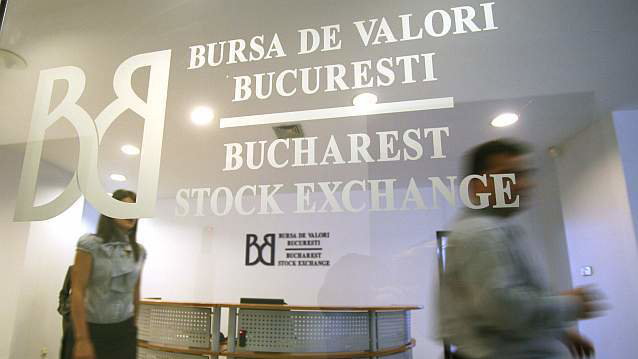

The stock sale offerings carried out by Romgaz (SNG.RO) and Nuclearelectrica (SNN.RO) were mainly acquired by investors that already held bourse accounts, and the number of accounts added only 2,000 in the last quarter of 2013, when the two listings took place.
The total number of accounts opened on the bourse stood at 85,381 at the end of 2013, without taking into account whether an investor has accounts opened with one or several brokers, according to data issued by the Investors Compensation Fund. Against September 30, the number of accounts rose by 2,073.
Compared with the end of 2012, the number of accounts advanced by around 4,100 (5.13%). The number of accounts is not equivalent with the number of persons investing on the bourse as a single investor can work through several brokerages. Thus, the real number of investors is even lower.
The increase in the number of accounts is small considering Nuclearelectrica and Romgaz listings.
Only through Romgaz offering, brokers expected the bourse could attract several tens of thousands new investors. However, statistical data show that only 2,000 persons chose to become investors in a period when two of the largest listings were carried out on the local stock market.
Within Romgaz offering, around 11,000 subscription orders were filed, but a comparison with compensation fund data shows most orders came from investors already holding trading accounts on the bourse.
In the case of Nuclearelectrica, around 2,800 shareholders resulted in the wake of floatation, but many of these probably held accounts already.
The data show the state’s privatizations fail to attract public interest despite the discounts granted to small investors. On the lack of stronger promotion by brokerage consortia, which primarily target cash-rich investment funds and to a lesser extent individual investors, and of a joint promotion campaign, the outcome is disappointing when it comes to attracting new investors on the bourse.
The low number of investors on the local stock exchange also reflects Romanians’ very low level of financial education. As a rule, the interest in bourse investments rises after the bourse already posts strong increases, as it happened in 2006-2007, namely toward the end of the growth cycle, but those who make the first investments in these periods risk significant losses.
Paradoxically, despite the low number of investors on the bourse, over 8.9 million stock holders are registered in Romania, according to Central Depository data. Most of them received stock as part of mass privatization programs, but nobody taught them what to do with the shares.
The lack of individual investors on the bourse is one of the reasons why the domestic capital market is not an economy funding tool, yet, and fails to secure financing for Romanian private companies.
(English version by Catalina Apostoiu)