
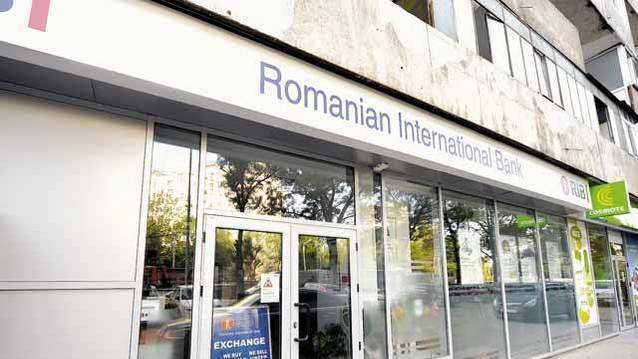
Romanian International Bank (RIB), set up in 1998 originally with Turkish capital and then taken over by American businessman Daniel Roberts, could soon be taken over by a European Union bank, which has not had a direct local presence up to now, market sources say.
The bank is in a special situation after its solvency ratio last year fell below the minimum 10% ratio required by Romanian central bank BNR, and shareholders did not bring additional capital, so the bank’s lending activity was basically suspended. Subsequently, the bank was only able to grant loans if the risk was zero (if there was a collateral deposit).
RIB was bought in 2002 by banker Daniel Roberts from the Turkish state, which had nationalized RIB’s parent bank following a banking crisis. Roberts, 59, had initially held 99.7% in RIB, but his shareholding fell to close to 89%, as a group of Romanian individuals, including bank managers, contributed money.
More recently Roberts got divorced, according to banking sources, so his majority stake was split evenly between him and his former wife Florina Roberts, who also has US citizenship.
Currently the third largest shareholder is Alexandra Postelnicu, daughter of millionaire Tiberiu Bica Postelnicu (who is related to former communist interior minister Tudor Postelnicu), who took over an almost 8% stake from her father.
RIB is a universal bank, with a market share of less than 0.2% by assets and a network of over 30 units, which could be the basis for building a more specialized lending institution.
AnaCap sends team to Cyprus to negotiate purchase of Marfin
After failing in 2011 to take over control of Banca Carpatica, London-based private equity fund AnaCap is in advanced talks to buy Cypriot-held Marfin Bank Romania, but at least two banks are said to also be interested.
At present the local bank is part of a “bad bank” set up after the liquidation of the former parent bank Cyprus Popular Bank (Laiki). Finding a buyer is the ideal solution as the current shareholder does not have the ability to support the local subsidiary. So far the Cypriot bank has been willing to cooperate, accepting the conversion into capital of deposits of EUR20 million in order to consolidate Marfin’s solvency and there are no sources of pressure, with prudential indicators being at a comfortable level. However, any decision will be carefully examined by the National Bank, considering that Marfin is still under direct supervision of the BNR and in theory the conditions are met for suspending the voting rights of the main shareholder.
Marfin was put to the test after the Cyprus crisis broke, and suffered massive withdrawals of around EUR100 million over three weeks. The bank was also under pressure after the EUR77 million deposits were transferred to it from the local branch of Bank of Cyprus, but the management kept the situation under control and clients calmed down after they saw the bank was able to make all payments.
Nextebank at its second attempt to sell
Hungary’s MKB, which owns around 95% in Nextebank, has opened again the data room of the Romanian bank and expects to receive offers from a bank and from an investment fund other than PineBridge, according to market sources.
Set up in 1993 in Targu Mures by shareholders from the methane gas industry, the bank then called Romexterra was taken over in 2006 by Hungarian group MKB, which over time boosted its market share from 55% to close to 95%. After the crisis broke in 2009, the bank was overwhelmed by non-performing loans. The Hungarian bank went through a restructuring process and ultimately made the strategic decision to exit the market.
A year ago the bank announced it had sealed a sale agreement with a group of investors led by investment fund PineBridge, but the latter did not match the conditions required by the BNR. Specifically the fund was not supervised by a financial supervisory authority, which the Romanian central bank deemed essential.
Similarly to the other two banks mentioned, Nextebank does not have an important position at system level, but a clarification of its situation is important as its current shareholder no longer wants to do business on the Romanian market.
The year 2013 could also come with other transactions involving small and medium-sized banks.
Businessman Dorinel Umbrarescu, known as one of the ‘asphalt kings,” has recently reached agreement with Greek-held Piraeus to take over the license, network and part of ATE Bank’s balance sheet. Piraeus Bank Romania will absorb the bulk of ATE’s assets and liabilities. But the transaction with Umbrarescu needs to get the approval of the National Bank first.
The list of banks that could change their majority shareholder also includes Banca Carpatica, but as the restructuring process of the past few years has been successful and with the bank returning to profit, Carpatica can make it on the market with its current shareholding structure, having Sibiu-based businessman Ilie Carabulea as its majority shareholder.
Market sources say the bank has attracted the interest of potential investors, but it remains to be seen if talks will come to anything.
(English version by Daniela Stoican)