

1. Two bills subject to public debate
In January 2012, the turmoil generated by the healthcare system reform by a bill that had just been put up for debate peaked and people took to the streets unhappy with its provisions (which included a shift in emphasis from the state to the private sector).
The bill was withdrawn due to public pressure and the Health Ministry started talks with the actors in the system over a second version.
The second version, substantially different from the first (it stipulates that the patient may choose who manages their money, either the government or the private sector) was put up for debate in the summer but has yet to the reach the parliament.
2. Record number of health ministers
Five ministers were in office at the Health Ministry this year: Ritli Ladislau (until May), Vasile Cepoi (May-September), Victor Ponta (interim minister in October-November), Raed Arafat (November-December), Eugen Nicolaescu (currently in office).
The record changes at the helm of the Ministry translated into a lack of concrete projects to improve medical service quality.
The National Health Insurance House (CNAS) saw changes too, as chairman Lucian Duta resigned and Doru Badescu replaced him.
3. Cantacuzino Institute production shutdown
The year 2012 is the first in the 91-year history of the Cantacuzino Institute when no vaccine left its production facility and Romania had to import both BCG (tuberculosis) vaccine for infants and seasonal flu vaccine. Production should gradually restart in 2013.
 4. Electronic prescription
Physicians can issue electronic prescriptions to their patients as of this summer. Traditional paper-based prescriptions will remain in use alongside electronic prescriptions until January 2013.
As of January 2013, every physician will be required to issue only electronic prescriptions. Electronic prescription means doctors write the prescription on their computers choosing drugs and dosage from a preset list and then print it out and hand it to the patients.
The patients then take it to the drugstore to have it filled, where the attendants scan the barcode and issue the requested drug.
5. Return to centralized procurement
The acquisition of drugs, equipment or any other things hospitals need will be centralized and done by the Health Ministry. This goes for both the Health Ministry-funded procurement for the hospitals it operates and for the hospitals managed by local authorities.
Acquisitions paid for with other types of funds are not required to follow the procedure (such as those funded by the local council when the hospital calls for bids to buy what it needs). The law has not been finalized yet.
6. Pharmaceutical market slowdown
The pharmaceutical market fell by 0.9% in euros (but was up 5.2% in lei) in the third quarter of the year compared with the year-ago period, according to the data of market research firm Cegedim Romania.
The industry therefore slowed down significantly at the end of the year, after having posted growth of more than 20% in the previous years.
 7. EUR100 million projects on private healthcare services market
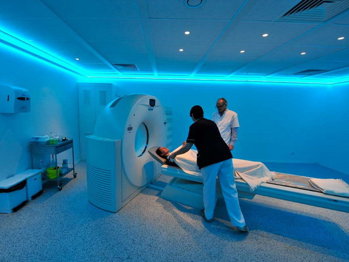
The private medical sector attracted more than EUR100 million investments in 2012, according to a ZF analysis of the data supplied by healthcare companies. The biggest project was a EUR40 million hospital, a foreign investment made in Bucharest. The 2012 investments are below the record EUR130 million of 2011.
8. Sensiblu takes over City Pharma
Retail pharmacy network Sensiblu, part of the A&D Pharma group, began the acquisition of 90 City Pharma pharmacies in May and expanded its network to about 400 throughout the country.
9. Health card pilot project in Arad
A pilot project has been conducted in Arad over the last few months to test the implementation of the health card as of 2013 and had 16 family physicians and 320 patients participating in it. The card will become mandatory in 2013 when the authorities begin distributing it.
10. Pharmaceutical market leader changes manager
Jacques Nathan, country manager of Sanofi Romania, the largest pharmaceutical company in this country, ended his term in December and will be replaced by Christophe Gourlet in 2013.
(English version by Loredana Fratila-Cristescu)