
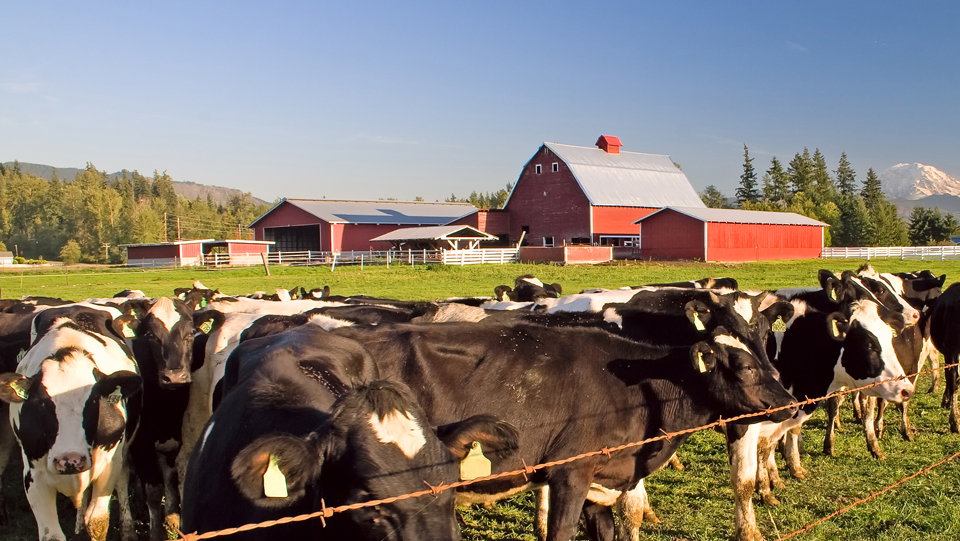
The family of the former state secretary Valentin Soneriu, Andra Paraschiv and Dimitrie Musca are the three largest Romanian owners of cattle in Romania and have 3,900 head.
CarmOlimp and IAC Arad integrated meat and milk production by processing in their own retail chains, while Pajo Holding is one of the major exporters of live cattle, according to APIA data ranking owners by subsidies received for each separate fiscal entity.
Other cattle owners among the top 20 are suppliers of multinational dairy processors, meat processors taking the step towards integrated production and grain and oilseeds producers that made the shift to livestock farming.
“I make EUR500,000 profit a year from 1,200 cows,” says Dimitrie Musca, owner of IAC Arad, a company that is part of Combinatul Agroindustrial Curtici.
Cattle are a very important part of the business of the Romanian businessman, as they enable him to turn its vegetal production into milk and meat, which he then sells through his 35-store chain in Western Romania.
“I have meat cows and dairy cows. The entire production of meat and milk is sold in the group’s stores,” Musca says. He added he had increased the number of cattle by one third to 1,200 in the past year and set out to raise the number even further to 1,400 slowly.
“I want us to grow slowly, step by step, not rush in any way. I’ve never given up cattle farming. I’ve been raising cattle since I worked for the CAP (the former state-run collective farms during the communist days i.e.).”
The increase in the number of cattle at Combinatul Agroindustrial Curtici’s farm is not in sync with the market trend, considering the cattle stock decline by more than 764,000 head or 27% in the last seven years. Romania has one of the lowest densities of cattle in the EU compared to total agricultural land.
A significant contribution to the decline came from the rural households raising only several head of cattle due to the rising costs of keeping them.
Although Romania farmers sell the milk at the lowest price in the EU, local entrepreneurs like Claudiu Davitoiu (Agroindaf Afumati), Nicusor Serban (Agroserv Mariuta), and Gavrila Tuchilus (Agrimat Matca) keep more than 600 cattle in their farms and consolidate the business in this sector.
“We have 800 cows, 350 of which dairy cows and we sell 9,200 liters of milk every day,” says Petrica Azoitei, general manager of Agroind Focsani, a company with EUR1.5 million revenue a year.
Tension between livestock farmers and processors peaked last year so the Competition Council inspectors launched a probe last summer on suspicion of a potential buying price fixing agreement.
The Agriculture Ministry modified the cattle subsidy scheme this year so payment was made per actual head in each farm in early 2013 instead of using the number of cattle registered in 2008 to calculate payments as the old system did.
Cattle farmers received EUR100 per head and APIA paid EUR129 million in direct farming subsidies for about 150,000 farms this year. Each farm got an average of EUR3,800.
The cattle stock was worth EUR300 million last year, slightly lower than in 2012, but one third less than seven years ago.
The cattle market is the third largest in the livestock farming sector after swine (EUR900 million) and fowl (EUR469 million), according to Eurostat.
(English version by Loredana Fratila-Cristescu)